


COPD
COPD is a chronic lung disease that may be associated with long-term exposure to harmful particles and gases, most notably cigarette smoking. The course and severity of the disease can vary considerably from person to person.
Pulmonary function tests are among the key assessments in diagnosis and follow-up. In addition, the person’s complaints, physical capacity, frequency of exacerbations, and, where necessary, imaging findings are also taken into account.
Depending on the severity of the disease, the treatment approach may include quitting smoking, medications, pulmonary rehabilitation, vaccination, oxygen therapy, or, in selected patients, more advanced interventional and surgical options.
Emphysema
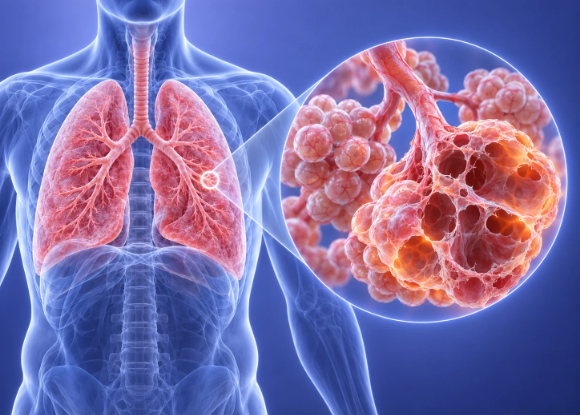
Emphysema is a condition characterized by damage to the structure of the air sacs in the lungs and a loss of their normal elasticity. It can be one of the major structural components of COPD, but not every COPD patient has the same degree of emphysema.
The distribution and extent of emphysema within the lungs can vary between individuals. In some patients certain areas of the lung are more affected, while in others the disease may be more widespread.
Computed tomography (CT) can provide important information on the distribution and structural features of emphysema. These features may be especially important when evaluating advanced treatment options.

Advanced-Stage COPD
As COPD progresses, shortness of breath may become more pronounced and the person’s ability to carry out daily activities may decline. Recurrent exacerbations, severely reduced lung function, or the need for oxygen may occur in advanced disease.
The evaluation of advanced-stage COPD does not rely on breathing test results alone. The patient’s symptoms, exercise capacity, blood gas values, frequency of exacerbations, coexisting conditions, and overall health are assessed together.
At this stage, in addition to optimizing standard medical treatment, pulmonary rehabilitation, long-term oxygen therapy, and, in suitable patients, advanced interventional or surgical options may be considered.
Advanced-Stage Emphysema
In advanced emphysema, structural damage to the lung tissue may become pronounced, and hyperinflation of the lungs can adversely affect breathing mechanics.
The distribution of the disease within the lungs, the condition of the healthy tissue, lung function, and the person’s physical capacity are important in evaluating treatment options.
In selected patients, advanced treatment options such as bronchoscopic or surgical lung volume reduction may be considered. In very advanced, irreversible lung disease, evaluation for lung transplantation may be considered in suitable patients.
These methods are not suitable for every patient with emphysema and require careful patient selection.


Treatment Options for COPD and Emphysema
Treatment for COPD and emphysema is planned according to the severity of the disease, its predominant features, and the person’s overall health.
The foundation of treatment may include quitting smoking, appropriate inhaler therapy, encouraging physical activity, pulmonary rehabilitation, prevention of infections, and oxygen support when needed.
In selected patients with advanced emphysema, bronchoscopic lung volume reduction procedures or lung volume reduction surgery may be considered. In end-stage lung disease, lung transplantation may be considered as a separate treatment option for people who meet certain criteria.
Which method may be considered is not determined by the name of the disease alone; it is decided by reviewing breathing tests, CT findings, exercise capacity, coexisting conditions, and the response to previous treatments together.
How Are COPD and Emphysema Evaluated?
The evaluation process varies depending on the person’s complaints and the characteristics of the disease. Pulmonary function tests, computed tomography (CT), assessment of oxygen levels, blood gas analysis, and tests that measure exercise capacity may be used as needed.Especially in advanced disease, the goal is not only to determine the stage of COPD. It is also important to understand what structural changes are present in the lungs, how these changes are distributed, and how symptomatic the patient remains despite current treatment.
Based on this evaluation, different options may be considered, such as continuing or adjusting medical treatment, rehabilitation, interventional procedures, surgical treatment, or evaluation for transplantation.