COPD
What Is COPD? Information on Its Symptoms, Causes, Diagnosis with Spirometry, Inhaler Treatments, Pulmonary Rehabilitation, and Advanced Treatment Options.
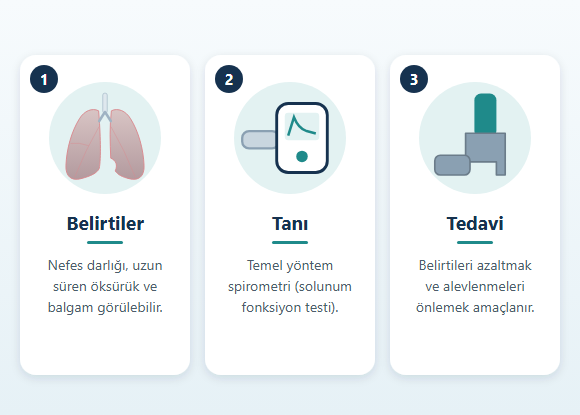
What Is COPD? Symptoms, Diagnosis, and Treatment
Chronic obstructive pulmonary disease, or COPD for short, is a chronic lung disease in which airflow is persistently limited when breathing out, as a result of structural changes in the airways and lung tissue.
COPD is not a single, uniform disease.
In some patients, narrowing of the small airways and features of chronic bronchitis are more prominent, while in others emphysema of the lung tissue may predominate. More than one of these features can also be present in the same person.
Common symptoms of COPD include:
Smoking is one of the most important risk factors for developing COPD, but COPD does not occur only in people who smoke. Biomass smoke, occupational dust and chemicals, air pollution, lung development in childhood, certain infections, and genetic factors such as alpha-1 antitrypsin deficiency can also contribute to the development of the disease. COPD is not diagnosed solely on the basis of symptoms, smoking history, or a lung CT scan. The key method for confirming the diagnosis is a pulmonary function test called spirometry.
Rather than fully restoring damaged lung tissue, the goals of COPD treatment are to:
- Shortness of breath
- Long-lasting cough
- Coughing up phlegm
- Wheezing
- A feeling of tightness in the chest
- Difficulty climbing stairs or walking uphill
- Reduced exercise capacity
- Recurrent respiratory infections
- Tiring quickly during daily activities
Smoking is one of the most important risk factors for developing COPD, but COPD does not occur only in people who smoke. Biomass smoke, occupational dust and chemicals, air pollution, lung development in childhood, certain infections, and genetic factors such as alpha-1 antitrypsin deficiency can also contribute to the development of the disease. COPD is not diagnosed solely on the basis of symptoms, smoking history, or a lung CT scan. The key method for confirming the diagnosis is a pulmonary function test called spirometry.
Rather than fully restoring damaged lung tissue, the goals of COPD treatment are to:
- Reduce shortness of breath and other symptoms
- Preserve physical capacity
- Prevent exacerbations
- Reduce hospital admissions
- Slow the rate of lung function loss
- Support independence in daily life
- Improve quality of life
- Evaluate advanced treatment options in suitable patients
What Is COPD?
COPD is a chronic disease characterized by persistent limitation of airflow when breathing out, which can affect the airways and the lung tissue to varying degrees.
In the airways, the following may develop:
In the lung tissue, some patients may develop:
These changes mean that the person cannot breathe out the air they have inhaled quickly enough. Especially when breathing speeds up during physical activity, a new breath may be taken before the previous one has been fully exhaled. In this situation, more and more air can become trapped in the lungs. This mechanism, called dynamic hyperinflation, is one of the main causes of exertional shortness of breath in COPD.
In the airways, the following may develop:
- Long-term inflammatory changes
- Thickening of the bronchial walls
- Increased mucus production
- Narrowing of the small airways
- Fibrotic changes around the airways
- Early closure of the small airways when breathing out
In the lung tissue, some patients may develop:
- Reduced elastic recoil
- Air trapping
- Hyperinflation
- A reduced gas-exchange surface
These changes mean that the person cannot breathe out the air they have inhaled quickly enough. Especially when breathing speeds up during physical activity, a new breath may be taken before the previous one has been fully exhaled. In this situation, more and more air can become trapped in the lungs. This mechanism, called dynamic hyperinflation, is one of the main causes of exertional shortness of breath in COPD.
Are COPD and Chronic Bronchitis the Same Thing?
Chronic bronchitis sets the stage for COPD.
Chronic bronchitis is a clinical condition characterized by long-lasting cough and mucus production.
In the classic definition, chronic bronchitis is a productive cough, not explained by another cause, that lasts at least three months each year for two consecutive years.
In chronic bronchitis, the following may be seen:
However, not everyone with chronic bronchitis has COPD. To confirm a diagnosis of COPD, persistent airflow limitation must be demonstrated on spirometry. Likewise, not all COPD patients have a persistent cough and phlegm.
In chronic bronchitis, the following may be seen:
- An increase in mucus-producing cells
- Thickening of the airway walls
- Accumulation of secretions in the bronchi
- Narrowing of the small airways
- A tendency toward recurrent infections or exacerbations
However, not everyone with chronic bronchitis has COPD. To confirm a diagnosis of COPD, persistent airflow limitation must be demonstrated on spirometry. Likewise, not all COPD patients have a persistent cough and phlegm.
What Is the Relationship Between COPD and Emphysema?
COPD and emphysema are not the same concept.
COPD is a broad clinical disease framework characterized by persistent airflow limitation.
Emphysema, on the other hand, refers to anatomical damage to the air sacs and elastic structure of the lung.
In a patient with COPD, the following may coexist in varying proportions:
In some patients emphysema is very prominent, while in others narrowing of the airways and secretion problems are more to the fore. This distinction is especially important when planning advanced treatments. The detailed evaluation of emphysema and interventional treatments for emphysema should be addressed separately.
In a patient with COPD, the following may coexist in varying proportions:
- Airway disease
- Chronic bronchitis
- Emphysema
In some patients emphysema is very prominent, while in others narrowing of the airways and secretion problems are more to the fore. This distinction is especially important when planning advanced treatments. The detailed evaluation of emphysema and interventional treatments for emphysema should be addressed separately.
What Causes COPD?
COPD usually does not arise from a single cause.
The disease can develop as a result of the interaction between harmful exposures a person encounters throughout life and their genetic characteristics, lung development, and biological susceptibility.
The main risk factors may include:
The fact that not everyone who smokes the same amount develops COPD shows that individual susceptibility also plays an important role in the development of the disease.
The main risk factors may include:
- Cigarette smoking
- Cigars, pipes, and other tobacco products
- Secondhand smoke
- Inhaled harmful chemicals
- Smoke from wood, coal, dung, and similar fuels
- Occupational dusts
- Chemical fumes
- Exposures in the mining, metal, textile, or construction industries
- Air pollution
- Recurrent lung infections in childhood
- Premature birth
- Inadequate lung development in childhood
- Asthma and airway hyperresponsiveness
- Alpha-1 antitrypsin deficiency
The fact that not everyone who smokes the same amount develops COPD shows that individual susceptibility also plays an important role in the development of the disease.
Can Nonsmokers Get COPD?
Yes.
COPD can also develop in people who have never smoked.
Possible causes include:
When persistent airflow limitation is found in a person who has never smoked, diseases other than COPD that can cause similar pulmonary function abnormalities should also be considered.
Possible causes include:
- Occupational dust and chemical exposure
- Air pollution
- Lung damage in childhood
- Lung development that does not reach the expected level
- Long-standing airway diseases
- Certain previous lung infections
- Alpha-1 antitrypsin deficiency
When persistent airflow limitation is found in a person who has never smoked, diseases other than COPD that can cause similar pulmonary function abnormalities should also be considered.
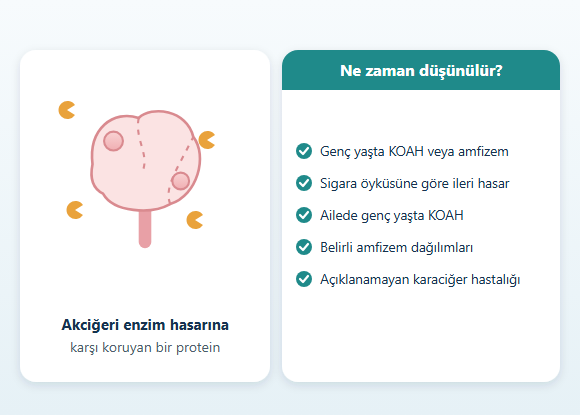
What Is Alpha-1 Antitrypsin Deficiency?
Alpha-1 antitrypsin is a protein that helps protect lung tissue against damage caused by certain enzymes.
Genetic alpha-1 antitrypsin deficiency can predispose some people to lung damage and emphysema, particularly at a young age.
Alpha-1 antitrypsin deficiency may be given greater consideration in the following situations:
Alpha-1 antitrypsin deficiency may be given greater consideration in the following situations:
- COPD or emphysema at a young age
- Lung damage more advanced than expected from the smoking history
- A family history of COPD developing at a young age
- Certain patterns of emphysema distribution
- Unexplained liver disease
What Are the Symptoms of COPD?
COPD symptoms usually develop slowly.
For this reason, a person may attribute early limitations to aging, weight, smoking, or being out of shape.
Common symptoms may include:
In advanced COPD, the following may be seen:
These symptoms may be related to advanced respiratory failure, low oxygen levels, carbon dioxide buildup, or coexisting heart disease.
Common symptoms may include:
- Shortness of breath when walking uphill
- Needing to stop when climbing stairs
- Being unable to walk fast
- Walking more slowly than peers
- Long-lasting cough
- Coughing up phlegm
- Morning cough
- Wheezing
- A feeling of tightness in the chest
- Recurrent bronchitis or respiratory infections
- Symptoms worsening in cold weather
- Tiring early during daily tasks
- Avoiding physical activity
In advanced COPD, the following may be seen:
- Shortness of breath at rest
- Running out of breath while talking
- Marked weight loss
- Muscle loss
- Bluish discoloration of the lips or fingers
- Swelling in the legs
- Sleep disturbances
- Morning headaches
- Changes in consciousness
These symptoms may be related to advanced respiratory failure, low oxygen levels, carbon dioxide buildup, or coexisting heart disease.
Why Does COPD Cause Shortness of Breath?
Shortness of breath in COPD has more than one cause.
Narrowing of the small airways can make it harder for air to flow out when breathing out.
When air trapping occurs in the lungs, the chest wall and respiratory muscles have to work at higher volumes.
This can become more pronounced when breathing speeds up during physical activity.
In addition, the following can also affect the severity of shortness of breath:
For this reason, the degree of shortness of breath does not always parallel the spirometry results.
In addition, the following can also affect the severity of shortness of breath:
- Physical deconditioning
- Muscle weakness
- Heart disease
- Anemia
- Obesity
- Anxiety
- Other coexisting lung diseases
For this reason, the degree of shortness of breath does not always parallel the spirometry results.
What Is a COPD Exacerbation?
A COPD exacerbation is a worsening of a person's shortness of breath, cough, or phlegm over a short period, beyond the usual day-to-day variation.
Exacerbations may be associated with:
A similar picture can also be caused by different conditions such as:
During an exacerbation:
Exacerbations may be associated with:
- Viral infections
- Bacterial infections
- Air pollution
- Exposure to harmful smoke or chemicals
- Irregular use of medications
A similar picture can also be caused by different conditions such as:
- Pneumonia
- Heart failure
- Pulmonary embolism
- Pneumothorax
- Heart rhythm disorders
During an exacerbation:
- Shortness of breath may increase
- The amount of phlegm may increase
- The color of the phlegm may change
- Wheezing may become more noticeable
- Oxygen levels may drop
- Daily activities may be severely limited
How Is COPD Diagnosed?
Three key areas are evaluated together in diagnosing COPD:
Similar symptoms can be caused by:
For this reason, evaluating alternative causes is important, especially at the time of the initial diagnosis.
- The patient's symptoms
- Risk factors and exposure history
- Persistent airflow limitation on spirometry
Similar symptoms can be caused by:
- Asthma
- Heart failure
- Bronchiectasis
- Pulmonary fibrosis
- Pulmonary hypertension
- Anemia
- Obesity
- Lung cancer
- Neuromuscular diseases
For this reason, evaluating alternative causes is important, especially at the time of the initial diagnosis.
What Is Spirometry?
Spirometry is a pulmonary function test that measures how much air a person can breathe out and how quickly they can breathe it out.
The main measurements are:
To confirm a diagnosis of COPD, persistent airflow limitation must be demonstrated on spirometry performed after administration of a bronchodilator medication. A post-bronchodilator FEV1/FVC ratio below 0.70 is the key spirometric criterion supporting a diagnosis of COPD in the appropriate clinical setting. If results are borderline or inconsistent with the clinical picture, the test may need to be repeated with proper technique.
The main measurements are:
- FEV1: The amount of air exhaled in the first second of a forceful breath out
- FVC: The total amount of air that can be exhaled during a forceful breath out
- FEV1/FVC: The ratio of the air exhaled in the first second to the total air that can be exhaled
To confirm a diagnosis of COPD, persistent airflow limitation must be demonstrated on spirometry performed after administration of a bronchodilator medication. A post-bronchodilator FEV1/FVC ratio below 0.70 is the key spirometric criterion supporting a diagnosis of COPD in the appropriate clinical setting. If results are borderline or inconsistent with the clinical picture, the test may need to be repeated with proper technique.
What Does FEV1 Mean?
FEV1 provides important information about the degree of airflow limitation in the airways.
Based on the post-bronchodilator FEV1 as a percentage of the predicted value, airflow limitation can generally be classified as:
Two people with the same FEV1 level may differ in their:
Treatment is not planned on the basis of FEV1 alone.
- GOLD 1: FEV1 80% of predicted or higher
- GOLD 2: 50-79%
- GOLD 3: 30-49%
- GOLD 4: Below 30%
Two people with the same FEV1 level may differ in their:
- Shortness of breath
- Frequency of exacerbations
- Walking capacity
- Oxygen levels
- Muscle strength
- Quality of life
Treatment is not planned on the basis of FEV1 alone.
How Is the Stage of COPD Determined?
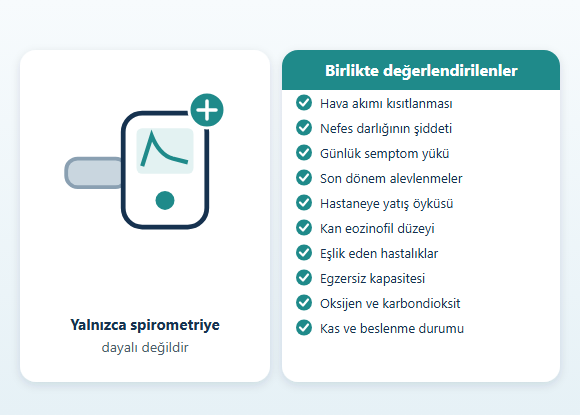
COPD assessment is no longer simply a spirometry-based staging of "mild, moderate, severe."
The assessment may consider the following together:
- The degree of airflow limitation
- The severity of shortness of breath
- The daily symptom burden
- Recent exacerbations
- History of hospital admissions
- Blood eosinophil level
- Coexisting conditions
- Exercise capacity
- Oxygen and carbon dioxide status
- Muscle and nutritional status
What Are the CAT and CAAT Scores?
Standardized eight-question assessment tools can be used to evaluate the impact of COPD on daily life.
The CAT, known as the COPD Assessment Test, is now also used under the name Chronic Airways Assessment Test, or CAAT.
The two scales have equivalent questions and scoring.
The assessment asks about areas such as:
A higher score may indicate a greater impact of the disease on daily life. A CAT or CAAT score alone does not establish a diagnosis.
The assessment asks about areas such as:
- Cough
- Phlegm
- Chest tightness
- Shortness of breath when climbing stairs or hills
- Activities at home
- Confidence about leaving the house
- Sleep
- Energy level
A higher score may indicate a greater impact of the disease on daily life. A CAT or CAAT score alone does not establish a diagnosis.
What Is the mMRC Dyspnea Scale?
The mMRC scale is a simple scale that assesses the impact of shortness of breath on physical activities.
It assesses whether the person:
The mMRC does not measure lung function directly, but it helps show the impact of shortness of breath on daily life.
It assesses whether the person:
- Experiences shortness of breath only during strenuous exercise
- Has difficulty when walking fast
- Walks more slowly than peers
- Has to stop after a certain distance
- Experiences shortness of breath even during daily activities such as getting dressed
The mMRC does not measure lung function directly, but it helps show the impact of shortness of breath on daily life.
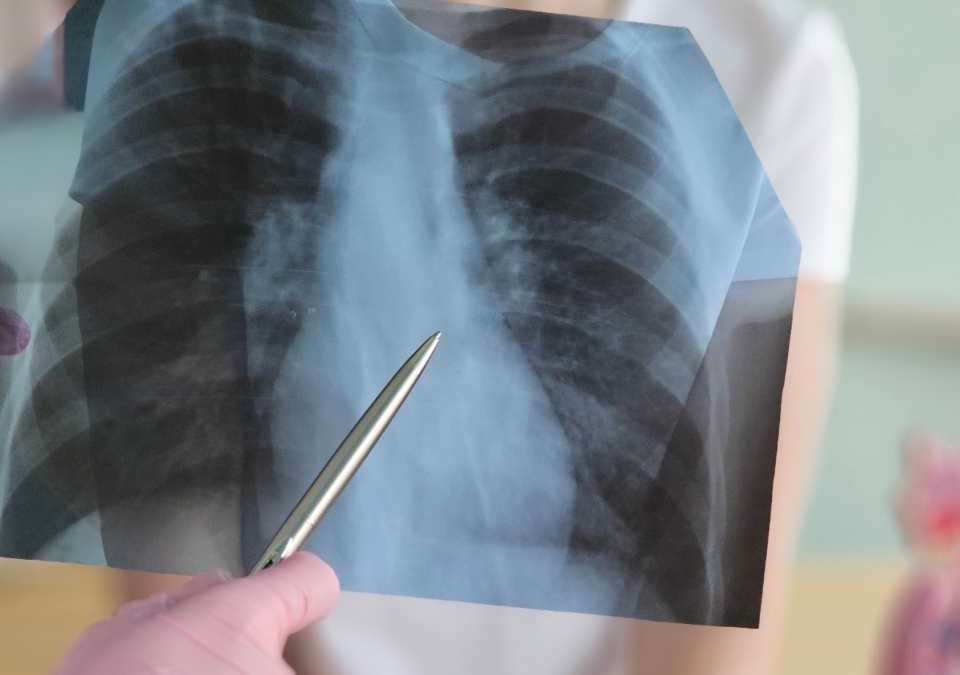
Are Chest X-Rays Used in COPD?
A chest X-ray alone does not confirm a diagnosis of COPD.
However, it can provide information about:
- Overinflation of the lungs
- Flattening of the diaphragm
- Large bullae
- Pneumonia
- Heart enlargement
- Pleural fluid
- A lung mass
- Other chest diseases
When Is Computed Tomography Used in COPD?
Computed tomography is not used routinely to diagnose COPD on the basis of CT alone.
When needed, CT can be used to evaluate:
- Emphysema
- Bullae
- Bronchiectasis
- Changes in the airway walls
- Lung nodules
- Suspected lung cancer
- Other lung diseases
What Other Breathing Tests Can Be Used in COPD?
Spirometry is the key test for diagnosing COPD, but it may not fully explain the clinical picture in every patient. In selected patients, the following may be used:- Lung volumes
- Diffusing capacity
- Body plethysmography
- Oxygen measurement
- Arterial blood gas
- Six-minute walk test
- Cardiopulmonary exercise test
What Is Diffusing Capacity?
Diffusing capacity, known as DLCO, provides information about the ability of gases such as oxygen to pass from the lungs into the blood. It can be helpful particularly in evaluating emphysema, pulmonary vascular diseases, or other lung diseases. A low DLCO is not specific to COPD. Anemia, pulmonary fibrosis, and pulmonary vascular diseases can also affect the result.What Does Body Plethysmography Show?
Body plethysmography can assess the amount of air remaining in the lungs and the total lung volumes. In particular, it provides information about:- Air trapping
- Residual volume
- Total lung capacity
- Hyperinflation
Oxygen Measurement and Blood Gas
A finger pulse oximeter provides approximate information about the oxygen saturation of the blood. An arterial blood gas test may be needed when the oxygen level is persistently low, borderline, or inconsistent with the clinical picture. An arterial blood gas test evaluates:- Oxygen pressure
- Carbon dioxide pressure
- Acid-base balance
Six-Minute Walk Test
The six-minute walk test measures the distance a person can walk on a flat surface in six minutes. During the test, the following can be monitored:- Walking distance
- Oxygen saturation
- Heart rate
- Shortness of breath
- Fatigue
- Assessing physical capacity
- Planning pulmonary rehabilitation
- Evaluation before advanced treatments
- Follow-up after treatment
Cardiopulmonary Exercise Test
The cardiopulmonary exercise test examines the combined response of the heart, lungs, circulation, and muscles during controlled physical activity. The test can provide information about:- Oxygen consumption
- Carbon dioxide production
- Heart rate
- Breathing capacity
- Exercise duration
- The development of symptoms
How Is COPD Treatment Planned?
COPD treatment does not consist of a single medication or a single method. The treatment plan takes into account many factors, such as:- Severity of symptoms
- History of exacerbations
- Spirometry
- Features of chronic bronchitis or emphysema
- Blood eosinophil level
- Ability to use an inhaler device
- Oxygen and carbon dioxide status
- Physical capacity
- Smoking
- Coexisting conditions
- Nutritional and muscle status
Why Is Quitting Smoking Important?
Quitting smoking is one of the cornerstones of COPD treatment. Quitting smoking can:- Slow the rate of lung function loss
- Help reduce the risk of exacerbations
- Lower the risk of lung cancer
- Reduce the risk of cardiovascular disease
- Reduce the risk of surgical complications
- Make oxygen therapy safer
What Is Inhaler Therapy in COPD?
Inhaled medications deliver the drug directly to the airways. The main groups of inhaled medications used in COPD are:- Short-acting bronchodilators
- Long-acting beta-2 agonists
- Long-acting anticholinergic medications
- Inhaled corticosteroids
- Combination inhaler therapies
How Do Bronchodilators Work?
Bronchodilators help relax the smooth muscles surrounding the airways. These medications can:- Reduce shortness of breath
- Increase daily physical capacity
- Help reduce air trapping
- Bring daily symptoms under control
Are Inhaled Corticosteroids Used in Every COPD Patient?
No. Inhaled corticosteroids are not routinely needed in all COPD patients. They may be considered more often in patients:- At high risk of exacerbations
- With blood eosinophil levels above certain thresholds
- Who continue to have exacerbations despite bronchodilator treatment
- Who also have features of asthma
- Fungal infection in the mouth
- Hoarseness
- Bruising of the skin
- An increased risk of pneumonia in some patients
What Is Triple Inhaler Therapy?
Triple inhaler therapy combines:- A long-acting beta-2 agonist
- A long-acting anticholinergic
- An inhaled corticosteroid
Why Is Inhaler Technique Important in COPD?
When the right medication is used with the wrong inhaler technique, not enough of the medication may reach the lungs. When choosing an inhaler, the following may be considered:- Hand strength
- Hand-eye coordination
- Inspiratory capacity
- How the device is prepared
- The patient's ability to understand the device
Can Other Medications Be Used in COPD?
In selected patients, in addition to inhaler therapies, the following may be considered:- Phosphodiesterase-4 inhibitors
- Certain long-term antibiotic treatments
- Mucolytic medications
- Treatments aimed at controlling phlegm
Why Are Vaccines Important for COPD Patients?
Respiratory infections are one of the main causes of COPD exacerbations. Depending on the person's age, health status, and current national vaccination recommendations, vaccines against infections such as the following may be considered:- Influenza
- Pneumococcus
- COVID-19
- Pertussis (whooping cough)
- Shingles
- Respiratory syncytial virus
What Is Pulmonary Rehabilitation?
Pulmonary rehabilitation is more than just breathing exercises. A comprehensive, individually tailored program may include components such as:- Endurance exercises
- Muscle strengthening
- Breathing techniques
- Inhaler training
- Energy conservation techniques
- Nutritional assessment
- Disease education
- Psychosocial support
- Exacerbation management
- Reduce shortness of breath
- Improve walking capacity
- Support independence in daily life
- Help recovery after an exacerbation
- Increase physical capacity before advanced treatments
Breathing Exercises in COPD
Pursed-lip breathing and controlled diaphragmatic breathing can help some patients manage their breathing. In pursed-lip breathing, the person takes a controlled breath in and then breathes out more slowly through gently pursed lips. In some patients, this technique can help reduce early closure of the small airways during exhalation and help control air trapping. Breathing exercises should be taught in a way that suits the individual.Can People with COPD Exercise?
For many COPD patients, maintaining an appropriate level of physical activity is important. Remaining completely inactive for fear of shortness of breath can, over time, increase:- Muscle loss
- Physical deconditioning
- Decline in walking capacity
- Dependence in daily activities
Nutrition and Muscle Loss in COPD
Weight and muscle loss can occur in advanced COPD. While the energy spent on breathing increases, appetite may decrease. Muscle loss can negatively affect:- Walking capacity
- The endurance of the respiratory muscles
- Recovery after infection
- Tolerance of surgical and interventional treatments
When Is Oxygen Therapy Used in COPD?
Oxygen therapy is not necessary for every COPD patient who experiences shortness of breath. Long-term home oxygen therapy is considered in selected patients who have persistent and significant low oxygen levels at rest. Oxygen requirements can be determined by:- Finger pulse oximetry
- Arterial blood gas
- Measurements at rest
- Measurements during exercise
- Sleep assessment when needed
What Is Noninvasive Mechanical Ventilation?
Noninvasive mechanical ventilation is the delivery of pressurized breathing support through a face or nasal mask. It may be considered particularly in situations such as:- High carbon dioxide levels and respiratory acidosis during an acute COPD exacerbation
- Respiratory muscle fatigue
- Selected patients with chronic hypercapnia
- Breathing disorders during sleep
- COPD coexisting with sleep apnea
How Is a COPD Exacerbation Treated?
Treatment varies depending on the cause and severity of the exacerbation. When needed, the following may be used:- Short-acting bronchodilators
- Short-term systemic corticosteroids
- Antibiotics in suitable patients
- Controlled oxygen
- Noninvasive ventilation
- Fluids and other supportive treatments
Can COPD Be Cured Completely?
The structural lung damage that has occurred in COPD usually cannot be fully reversed. Standard drug treatments do not regenerate damaged lung tissue. However, with appropriate treatment:- Shortness of breath can be reduced
- The risk of exacerbations can be reduced
- Physical capacity can be increased
- Hospital admissions can be reduced
- The rate of disease progression can be influenced
- Quality of life can be supported
Are There Interventional Treatments for Advanced COPD?
Because COPD is a heterogeneous disease, advanced interventional treatments are not applied the same way to everyone. Especially in advanced disease, the direction of treatment may vary depending on:- Whether emphysema is present
- The distribution of emphysema
- Hyperinflation and air trapping
- Chronic bronchitis and secretion burden
- The presence of bullae
- Lung function
- Exercise capacity
- Coexisting conditions
- Bronchoscopic interventions
- Lung volume reduction methods
- Bullectomy
- Surgical treatments
- Lung transplantation
What Is COPD Balloon Treatment?
Because the term "COPD balloon" can be used for different procedures, it is necessary to define clearly which procedure is meant. One of the procedures described by this name in Türkiye is a method that uses a special balloon system during bronchoscopy to perform a mechanical procedure in the segmental and subsegmental airways, with the aim of reducing thick airway secretions. This method:- Is not an endobronchial valve
- Is not lung volume reduction surgery
- Does not remove emphysematous lung tissue
- Does not regenerate damaged alveoli
- Is not a direct substitute for standard inhaler therapies
- Current studies have focused particularly on selected COPD patients with features of chronic bronchitis and heavy airway secretions.
Is There Scientific Evidence for the COPD Balloon?
Over different periods, the following have been published on bronchoscopic balloon procedures:- Pilot studies
- Case series
- Prospective interventional studies
- The limited number of randomized controlled trials
- Relatively small patient numbers
- Techniques that have not been standardized
- Patient selection criteria that may vary between centers
- Limited long-term comparative results
What Are the Possible Risks of the COPD Balloon?
Possible risks of bronchoscopy and of a mechanical procedure performed on the airways include:- Bleeding
- Injury to the airway wall
- Bronchospasm
- Airway swelling
- Drop in oxygen levels
- Rise in carbon dioxide levels
- Infection
- Pneumonia
- COPD exacerbation
- Heart rhythm problems
- Complications of anesthesia or sedation
- Failure to achieve the expected benefit
Lung Transplantation in COPD
Lung transplantation is not a treatment for early- or intermediate-stage COPD. Transplant evaluation may be considered in selected people whose disease is very advanced despite medication, pulmonary rehabilitation, oxygen, and other appropriate treatments. The evaluation may take into account factors such as:- Very severe airflow limitation
- Severe shortness of breath
- Serious decline in quality of life
- Recurrent severe exacerbations
- Hospital or intensive care admissions
- Chronic low oxygen levels
- High carbon dioxide levels
- Pulmonary hypertension
- Serious loss of physical capacity
- General health status
Conditions That Can Occur Together with COPD
COPD should not be regarded as an isolated disease that affects only the lungs. COPD patients may have coexisting conditions such as:- Cardiovascular diseases
- Osteoporosis
- Muscle loss
- Anxiety and depression
- Metabolic diseases
- Sleep disorders
- Lung cancer
COPD and Lung Cancer Risk
COPD, and particularly long-term tobacco exposure, may be associated with an increased risk of lung cancer. New findings such as the following should not be attributed to COPD alone:- Coughing up blood
- Unexplained weight loss
- A change in the character of the cough
- Persistent hoarseness
- Constant one-sided chest pain
- Recurrent pneumonia in the same area
- A lung nodule on CT
Preoperative Evaluation in COPD Patients
In people with COPD, an evaluation for respiratory complications may be needed not only before lung surgery but also before other surgical procedures. The risk assessment may take into account:- How well COPD is controlled
- The timing of the last exacerbation
- Oxygen requirements
- Carbon dioxide level
- Smoking
- Inhaler therapies being used
- Exercise capacity
- The planned operation
- Duration of anesthesia
What Should COPD Patients Pay Attention to in Daily Life?
Daily habits are an important part of COPD management. Points to keep in mind include:- Taking medications regularly
- Using the correct inhaler technique
- Avoiding cigarettes and harmful smoke
- Not giving up physical activity entirely
- Reviewing vaccinations
- Eating a balanced diet
- Knowing the signs of an exacerbation
- Using oxygen equipment safely
- Taking precautions against heavy air pollution
- Regular medical follow-up
When Is Urgent Evaluation Needed in COPD?
The following symptoms may require urgent evaluation:- Shortness of breath that suddenly worsens at rest
- Breathing difficulty severe enough to prevent speaking
- Bluish discoloration of the lips or face
- Confusion
- Difficulty waking up
- New, severe chest pain
- Coughing up blood
- Sudden one-sided chest pain and shortness of breath
- Markedly low oxygen levels
- High fever and a decline in general condition
- New, severe palpitations
- Sudden shortness of breath together with swelling in a leg
How Is COPD Followed Up?
COPD follow-up is not based on spirometry results alone. At follow-up visits, the following may be evaluated:- Shortness of breath and other symptoms
- Number of exacerbations
- Hospital admissions
- Inhaler technique
- Adherence to treatment
- Smoking
- Physical capacity
- Oxygen level
- Weight and muscle status
- Coexisting conditions
- Medication side effects
- Imaging results when needed
Frequently Asked Questions About COPD
Does COPD occur only in smokers?
No. Smoking is an important risk factor, but other factors such as biomass smoke, occupational exposure, air pollution, lung development, and alpha-1 antitrypsin deficiency can also contribute to the development of COPD.
Is COPD diagnosed by CT alone?
No. CT can provide important information about the lung tissue, but spirometry is the key test for confirming a diagnosis of COPD.
What should the FEV1/FVC ratio be for COPD?
In a person with relevant symptoms and risk factors, a post-bronchodilator FEV1/FVC ratio below 0.70 is the key spirometric criterion used to confirm a diagnosis of COPD.
Are COPD and emphysema the same disease?
No. COPD is a broader clinical condition that refers to chronic airflow limitation. Emphysema describes structural damage to the lung tissue. Emphysema can be one component of COPD.
Can COPD be cured completely?
The structural lung damage that has occurred usually cannot be fully reversed. However, quitting smoking, appropriate medications, rehabilitation, and prevention of exacerbations can significantly reduce symptoms and the impact of the disease on daily life.
Should every COPD patient use oxygen?
No. Long-term oxygen therapy is used in selected patients who have persistently low oxygen levels to a certain degree. Shortness of breath alone is not sufficient grounds for oxygen therapy.
Can COPD patients exercise?
For many COPD patients, an appropriate level of exercise and physical activity is beneficial. The type and intensity of exercise should be tailored to the severity of the disease, oxygen status, and other health problems.
Is an inhaled steroid necessary for every COPD patient?
No. Inhaled corticosteroids are used in selected patients based on factors such as exacerbation history, blood eosinophil level, and features of asthma.
Can the COPD balloon be used for all COPD patients?
No. Bronchoscopic balloon procedures are methods that have been studied in specific patient groups. They should not be regarded as standard treatments for all COPD patients or as treatments with guaranteed results.
Can surgery or bronchoscopic treatment be performed for COPD?
They can be performed in selected patients with advanced disease. However, the method used depends on the nature of the patient's COPD. Different interventional treatments may be considered, particularly in patients with emphysema, hyperinflation, bullae, or certain airway characteristics.
Conclusion
COPD is a chronic lung disease in which airflow is limited when breathing out because of persistent changes in the airways and lung tissue. Although smoking is one of the most important risk factors, COPD does not occur only in people who smoke. The diagnosis is not made solely on the basis of symptoms or CT findings. In the appropriate clinical setting, persistent airflow limitation must be demonstrated on post-bronchodilator spirometry. COPD treatment is planned individually and may include:- Quitting smoking
- Bronchodilator inhalers
- Inhaled corticosteroids in selected patients
- Vaccines
- Pulmonary rehabilitation
- Exercise
- Nutritional support
- Oxygen or noninvasive ventilation when needed
- Prevention and early treatment of exacerbations
Disclaimer: The information on this page has been prepared for general information purposes. It does not replace a medical examination, diagnosis, or individualized treatment plan. The evaluation and treatment of COPD may vary depending on the severity of the disease, symptoms, exacerbation history, lung function, coexisting conditions, and the person's other health characteristics.