Lung Transplantation (Preoperative Evaluation)

For Which Diseases Is Lung Transplantation Performed? Candidacy, the Waiting List, Single and Double Lung Transplantation, Surgery, Organ Rejection and Follow-Up.
What Is Lung Transplantation?

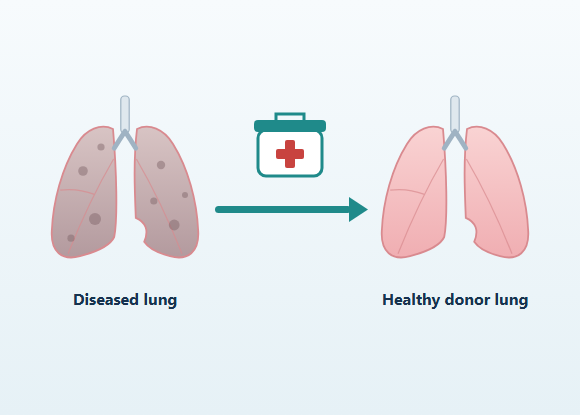
Lung transplantation is an advanced treatment considered for certain lung diseases that have reached an advanced stage and continue to progress despite available treatments. It involves replacing one or both lungs that can no longer function adequately with a healthy lung from a suitable donor. Not every patient with advanced lung disease is a transplant candidate. In addition to the type of disease and how quickly it progresses, the evaluation also considers the person's overall health, the function of other organs, infection risk, physical resilience and ability to follow the lifelong treatment and follow-up program required after surgery. The goal of lung transplantation in suitable patients is to improve breathing capacity and quality of life and, compared with the natural course of the disease, to help prolong survival. However, transplantation is not a one-time procedure that simply eliminates the disease. It is a major surgical operation, and lifelong use of immunosuppressive medications and regular follow-up are required to protect the transplanted lung.

For Which Diseases May Lung Transplantation Be Considered?

Lung transplantation may be considered for certain diseases in which irreversible, advanced lung damage has developed and available treatment options are no longer sufficient. The main disease groups may include:
  • Chronic obstructive pulmonary disease (COPD)
  • Advanced-stage emphysema
  • Lung disease due to alpha-1 antitrypsin deficiency
  • Idiopathic pulmonary fibrosis
  • Other progressive interstitial lung diseases
  • Cystic fibrosis
  • Advanced bronchiectasis
  • Pulmonary arterial hypertension
  • Sarcoidosis
  • Lymphangioleiomyomatosis
  • Certain occupational and environmental lung diseases
  • Advanced lung involvement due to selected connective tissue diseases
  • Certain congenital lung and vascular diseases
  • Advanced loss of function in a previously transplanted lung
Two people with the same diagnosis may not need a transplant at the same point in time. The rate of disease progression, loss of lung function, oxygen requirement, capacity for daily activities, frequency of hospital admissions and response to current treatments are evaluated together.

Lung Transplantation in COPD and Emphysema

COPD and emphysema are chronic diseases that can cause permanent damage to the airways and lung tissue. In advanced stages, shortness of breath can significantly limit daily life, breathing capacity may decrease and oxygen support may be needed. Lung transplantation may be considered in selected people whose advanced respiratory failure persists despite medication, oxygen support, pulmonary rehabilitation and, in suitable patients, bronchoscopic or surgical lung volume reduction methods. Not every patient with advanced COPD or emphysema is a transplant candidate. The evaluation considers the following together:
  • Loss of lung function
  • The impact of shortness of breath on daily life
  • The need for oxygen or respiratory support
  • Hospital and intensive care admissions
  • The distribution of emphysema in the lungs
  • The presence of pulmonary hypertension
  • Heart and vascular diseases
  • Nutritional status
  • Muscle strength and physical endurance
In some patients, the suitability of alternatives such as bronchoscopic or surgical lung volume reduction methods may also be evaluated before transplantation.

Transplantation in Pulmonary Fibrosis and Interstitial Lung Diseases

Pulmonary fibrosis is a condition characterized by progressive stiffening and scarring of the lung tissue. The lungs may lose elasticity, and the passage of oxygen into the blood may become more difficult. Some interstitial lung diseases, particularly idiopathic pulmonary fibrosis, can progress rapidly. For this reason, it may not be appropriate to start the transplant evaluation only after the person's general condition has severely deteriorated. The evaluation may take into account:
  • Changes in pulmonary function tests
  • Increasing oxygen requirement
  • Computed tomography findings
  • A drop in oxygen levels during exertion
  • Walking capacity
  • Development of pulmonary hypertension
  • Hospital admissions
  • The rate of disease progression
In lung fibrosis related to connective tissue diseases, not only the lungs but also the esophagus, kidneys, heart, musculoskeletal system and other organs that the disease may affect are evaluated.

Lung Transplantation in Cystic Fibrosis and Bronchiectasis

In cystic fibrosis and advanced bronchiectasis, permanent widening of the airways, heavy mucus production and recurrent infections may occur. As the disease progresses, breathing capacity may decrease, oxygen requirement may increase, and chronic or recurrent infections with certain microorganisms may develop. The transplant evaluation may examine:
  • The level of lung function and how quickly it is changing
  • Frequency of hospital admissions
  • The need for intravenous antibiotics
  • Recurrent or resistant infections
  • Microorganisms identified in sputum cultures
  • Nutritional status
  • Diabetes and other coexisting conditions
  • Bleeding from the lungs
  • History of pneumothorax
  • The need for oxygen or respiratory support
Infection status is important in the transplant evaluation. However, not every chronic carriage of a microorganism carries the same risk. The type of microorganism, its antibiotic susceptibility, the treatment options and the risk it may pose after transplantation are evaluated individually.

Lung Transplantation in Pulmonary Hypertension

Pulmonary hypertension covers different disease groups characterized by elevated pressure in the blood vessels of the lungs. In advanced stages, it can strain the right side of the heart and lead to right heart failure. Disease progression despite appropriate medication, deterioration of right heart function, fainting episodes, low cardiac output or frequent hospital admissions may lead to consideration of a transplant evaluation. In some patients, double lung transplantation may be sufficient. If the heart has advanced, irreversible structural or functional disease that is not expected to improve after transplantation, heart-lung transplantation may also be considered.

When Should Evaluation for Lung Transplantation Take Place?

Evaluation for lung transplantation is not a process that begins only once all other treatments have been exhausted and the person has reached the intensive care stage. If the evaluation is done too early, the risk posed by transplantation may be higher than the risk posed by the existing lung disease. If it is done too late, the person may have lost the physical reserve needed to withstand a major operation or may have developed other organ problems. When determining the right timing, the following are evaluated together:
  • The rate of disease progression
  • The benefit gained from current treatments
  • The expected course of the disease
  • Capacity for daily activities
  • The need for oxygen and respiratory support
  • Frequency of hospital admissions
  • The risk of transplant surgery
  • The likely wait for a suitable donor
Being referred to a transplant center does not mean that the person will be placed directly on the waiting list or will definitely undergo transplantation. The initial evaluation is the beginning of a process in which the potential benefits and risks of transplantation for the person are investigated.

How Is Candidacy for Lung Transplantation Determined?

Candidacy for lung transplantation is not determined by a single test, a single disease measurement or an age limit. Transplant centers evaluate the severity of the disease, the person's overall health and the overall picture created by the combination of different risk factors. In general, answers are sought to the following questions:
  • Is the lung disease at an advanced, irreversible stage?
  • Have the available treatment options been appropriately applied?
  • Is the risk of the disease progressing without transplantation high?
  • Does the expected benefit of transplantation outweigh the risks of surgery and long-term treatment?
  • Is the person able to withstand a major operation?
  • Can the postoperative medication and follow-up program be maintained?
  • Is the risk of infection or cancer at an acceptable level?
  • Is the function of other organs adequate for transplantation?
  • Can modifiable risk factors be reduced?
The presence of a single risk factor does not always mean that candidacy will be declined. However, the combination of several significant risk factors may increase the risk of complications after transplantation. The final decision is made individually by the transplant center.

Is Age a Barrier to Lung Transplantation?

In lung transplantation, it is not only chronological age but also the person's biological condition and coexisting health problems that are evaluated together. With advancing age, the following may be more common:
  • Heart and vascular diseases
  • Impaired kidney function
  • Muscle loss and frailty
  • Osteoporosis
  • Cancer risk
  • Difficulty recovering after surgery
For this reason, advanced age may increase the risk of transplantation, but the candidacy evaluation is not based solely on the person's date of birth. The level of risk accepted and the evaluation criteria may differ between transplant centers.

Why Are Frailty and Physical Reserve Important?

In advanced lung diseases, long-term shortness of breath and inactivity can lead to muscle loss, low exercise capacity and reduced physical reserve. Frailty is a multidimensional condition that involves not only muscle strength but also how well a person can withstand physiological stresses such as major surgery and the rehabilitation that follows. The evaluation may examine features such as:
  • Walking capacity
  • Muscle strength
  • Activities of daily living
  • Nutritional status
  • Exercise tolerance
  • Overall physical performance
The presence of frailty alone does not mean the same thing for everyone. In some people, it may be possible to improve physical capacity with rehabilitation, exercise and nutritional support. For this reason, physical condition is evaluated not only to determine candidacy but also to identify areas that can be improved before transplantation.

Conditions That May Be Barriers to Lung Transplantation

Candidacy criteria may vary depending on the transplant center and the person's medical condition. However, conditions that can significantly increase the risk of transplantation may include:
  • Active, uncontrolled infections
  • Certain malignant tumors that are active or carry a high risk of recurrence
  • Advanced, irreversible dysfunction of another organ
  • Serious uncontrolled heart or vascular diseases
  • Active tobacco and nicotine use
  • Active, uncontrolled substance use disorders
  • Serious adherence problems that may prevent the treatment and follow-up program from being maintained
  • Advanced frailty that cannot be corrected
  • Uncontrolled psychiatric or cognitive problems that prevent safe treatment follow-up
  • The coexistence of several serious diseases that create a very high surgical risk
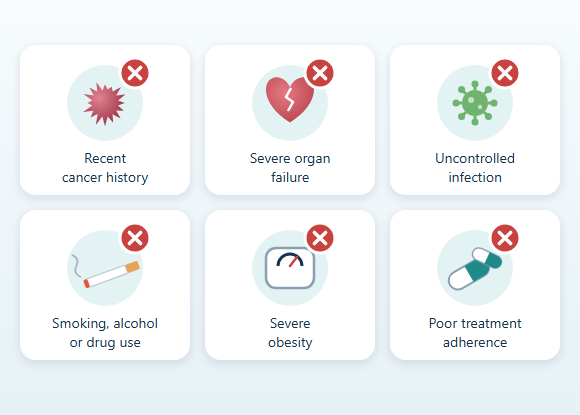
In people with a past history of cancer, the evaluation does not consider only the fact that cancer was previously diagnosed. The type, stage and treatment of the cancer, the likelihood of recurrence and the time spent disease-free are taken into account. In selected people with advanced disease in another organ, such as the kidney, liver or heart, combined transplantation of more than one organ may be considered.

Smoking and Nicotine Use

Active smoking and nicotine use pose a significant risk in lung transplantation. Tobacco use can have negative effects on:
  • Infection
  • Heart and vascular diseases
  • Cancer
  • Wound healing problems
  • The long-term health of the transplanted lung
Transplant centers may require candidates to quit smoking and other tobacco or nicotine products. This evaluation may include steps such as:
  • Quitting smoking
  • Stopping e-cigarette use
  • Not using other nicotine products
  • Reducing secondhand exposure
  • Confirmation with nicotine or cotinine tests when deemed necessary
Quitting smoking is not just a technical requirement for being placed on the waiting list. It is one of the key components of protecting health before and after transplantation.

What Tests Are Done Before Transplantation?

The evaluation for lung transplantation is multifaceted. The goal is not only to determine the severity of the lung disease, but also to assess the person's overall condition with respect to a major operation and the lifelong treatment that follows. The tests performed may vary depending on the disease and the individual.

Respiratory Evaluation

The evaluation may use:
  • Pulmonary function tests
  • Lung volumes
  • Diffusion capacity
  • Blood gas analysis
  • Six-minute walk test
  • Assessment of oxygen requirement
  • Chest computed tomography
  • Ventilation-perfusion studies when needed
  • Bronchoscopy
  • Sputum cultures
  • Assessment of the respiratory muscles

Cardiovascular Evaluation

Depending on the person's condition, tests such as the following may be needed:
  • Electrocardiography
  • Echocardiography
  • Right heart catheterization
  • Assessment of the coronary arteries
  • Assessment of the peripheral blood vessels
  • Measurement of pulmonary vascular pressures

Evaluation of Other Organs

To assess how health problems outside the lungs may affect transplant risk, the following may be performed:
  • Kidney and liver function tests
  • Digestive system evaluation
  • Bone density measurement
  • Dental and oral health evaluation
  • Cancer screening appropriate to age and personal risk
  • Infection tests
  • Nutritional assessment
  • Assessment of muscle strength and physical endurance

Immune System and Tissue Compatibility

The evaluation may examine:
  • Blood type
  • Tissue antibodies
  • Previous blood transfusions
  • Pregnancy history
  • Previous organ transplants
  • Immune tests that can be used for comparison with the donor
Previous blood transfusions, pregnancies or organ transplants can lead to the development of certain tissue antibodies. This may affect finding a suitable donor and the waiting period.

Psychological and Social Evaluation

After lung transplantation, regular use of medications, frequent checkups and measures to prevent infection are required. For this reason, the evaluation may address topics such as:
  • Understanding the treatment plan
  • Ability to keep taking medications
  • Psychological state
  • Cognitive state
  • Available family or social support
  • Access to the hospital
  • Ability to keep up with checkups and the medication schedule
The aim is not to judge the person based on their social circumstances or to exclude them solely because their support network is limited. Identifying existing needs and planning how safe care can be maintained after transplantation is part of the evaluation process.

Pulmonary Rehabilitation and Preparing for Transplantation

In people with advanced lung disease, shortness of breath can reduce physical activity. Over time, inactivity can lead to:
  • Muscle loss
  • Weakness
  • Reduced exercise capacity
  • Limitations in activities of daily living
Pre-transplant pulmonary rehabilitation programs may include:
  • Exercises tailored to the individual
  • Breathing exercises
  • Exercises to maintain muscle strength
  • Nutritional support
  • Adjustment of oxygen use
  • Planning of activities of daily living
The aim is not to eliminate the lung disease, but to help the person prepare for transplantation in the best possible physical condition.

Why Is Nutritional Status Important?

Both severe weight loss and excess weight can affect the risk of complications after transplantation. Malnutrition may be associated with:
  • Muscle loss
  • Increased risk of infection
  • Delayed wound healing
  • Weakness of the respiratory muscles
In some people, excess weight may increase:
  • The technical difficulty of the operation
  • Breathing problems
  • The risk of diabetes
  • Heart and vascular risks
  • Limited mobility
Nutritional goals are set individually according to the person's disease, muscle mass and overall health.

The Lung Transplantation Waiting List

Once the candidacy evaluations are complete, the transplant team reviews the results together. The person may:
  • Be found suitable for transplantation
  • Be followed up because it is considered too early for transplantation
  • Be re-evaluated after certain modifiable risks have been reduced
  • Be found to have a transplant risk that outweighs the expected benefit
Being placed on the waiting list does not mean that a suitable donor lung will be found within a short time. The disease and overall health may change during the wait. For this reason, the following may continue:
  • Clinical checkups
  • Blood tests
  • Pulmonary function tests
  • Imaging
  • Rehabilitation
  • Nutritional assessments
An infection, a newly developed illness or a temporary decline in general condition may lead to a re-evaluation of the person's status on the list.

How Is a Donor Lung Matched?

In lung transplantation, a compatible blood type alone is not enough. Many factors are evaluated between the donor and the recipient, such as:
  • Blood type compatibility
  • Lung and chest cavity size
  • Immune system characteristics
  • Tissue antibodies
  • Severity and urgency of the disease
  • The time and distance over which the organ can be transported
  • The medical characteristics of the donor lung
Organ allocation is carried out in accordance with the country's authorized organ transplant system and the medical rules in force. When a potentially suitable lung is found, the donor organ is re-evaluated at several stages. Being called to the hospital for transplantation does not mean that the transplant will definitely take place. If the donor lung is found to be unsuitable at the final evaluation, the procedure may be canceled.

Single Lung and Double Lung Transplantation

Lung transplantation can be performed on one side or both sides.

Single Lung Transplantation

In single lung transplantation, one of the diseased lungs is removed and replaced with a lung from the donor. It may be considered for some patients with pulmonary fibrosis and emphysema. Factors that may influence the decision include:
  • The type of disease
  • The person's age and general condition
  • Infection risk
  • Chest structure
  • Pulmonary vascular pressures
  • Donor organ availability
  • The center's surgical approach

Double Lung Transplantation

In double lung transplantation, both diseased lungs are removed and two donor lungs are implanted. In diseases with chronic infection in both lungs, such as cystic fibrosis and advanced bronchiectasis, double lung transplantation is usually preferred. This is because an infected lung left behind could become a source of infection for the new transplanted lung. Double lung transplantation may also be considered in pulmonary hypertension and other advanced lung diseases. The decision between single and double transplantation is not based solely on the person's preference. The characteristics of the disease, surgical risk, organ availability and expected outcomes are evaluated together.

Heart-Lung Transplantation

Heart-lung transplantation is the replacement of the heart together with both lungs. Today, it is considered only in selected patients. If heart problems caused by advanced lung disease have the potential to improve after the new lungs are implanted, double lung transplantation alone may be sufficient. If the heart has advanced, irreversible structural or functional disease, heart-lung transplantation may be considered.

How Is Lung Transplant Surgery Performed?

Lung transplantation is a major thoracic surgery operation performed under general anesthesia. The details of the operation may vary depending on whether a single or double lung transplant is performed and on the person's anatomical features. In general:
  1. The chest cavity is accessed through an appropriate surgical incision.
  2. The bronchial and vascular connections of the diseased lung are prepared.
  3. The diseased lung is removed.
  4. The bronchial and vascular connections of the donor lung are made.
  5. Blood flow is restored and the function of the new lung is evaluated.
  6. In double lung transplantation, similar steps are performed on the other side.
  7. Drainage tubes are placed in the chest cavity and the surgical incision is closed.
During surgery, cardiopulmonary bypass or ECMO may be used when needed to support heart and lung function. These support methods are not required in every transplant operation.

Intensive Care After Lung Transplantation

After lung transplantation, the patient is closely monitored in the intensive care unit. In the early period, the following may be needed:
  • Ventilator support
  • Heart and circulation monitoring
  • Chest drains
  • Intravenous medications
  • Pain control
  • Monitoring of kidney function
  • Bleeding control
  • Infection monitoring
  • Starting immunosuppressive medications
The time needed to come off the ventilator is not the same for everyone. The early function of the donor lung, the extent of the operation, the person's muscle strength and any complications that develop can affect the length of the intensive care stay. Some patients may need a temporary tracheostomy or ECMO support.

What Is Primary Graft Dysfunction?

Primary graft dysfunction is one of the significant complications in which the transplanted lung cannot provide adequate gas exchange in the early period after transplantation. Edema of the lung tissue and impaired oxygenation may occur. Depending on the person's condition, treatment may include:
  • Adjusting ventilator support
  • Controlling fluid balance
  • Circulatory support
  • Investigating infection and other possible causes
  • ECMO when necessary
The severity of primary graft dysfunction varies from patient to patient.

Why Are Immunosuppressive Medications Used?

The immune system may recognize the transplanted lung as foreign tissue. Medications that suppress the immune system are used to reduce the risk of organ rejection. Treatment usually involves using several medications that work through different mechanisms together. These medications can cause side effects such as:
  • Increased risk of infection
  • Impaired kidney function
  • High blood pressure
  • Diabetes
  • Osteoporosis
  • Changes in blood lipids
  • Certain nervous system side effects
  • Increased risk of certain types of cancer
Medication doses are adjusted based on blood levels, organ function, infections and side effects. Taking immunosuppressive medications irregularly or stopping them without the transplant team's knowledge can lead to organ rejection and loss of function of the transplanted lung.

Organ Rejection After Lung Transplantation

Organ rejection occurs when the immune system mounts an immune response against the transplanted lung. Rejection does not always mean that the transplanted lung will be lost completely. Some episodes of rejection can be detected early and treated.
Acute Cellular Rejection

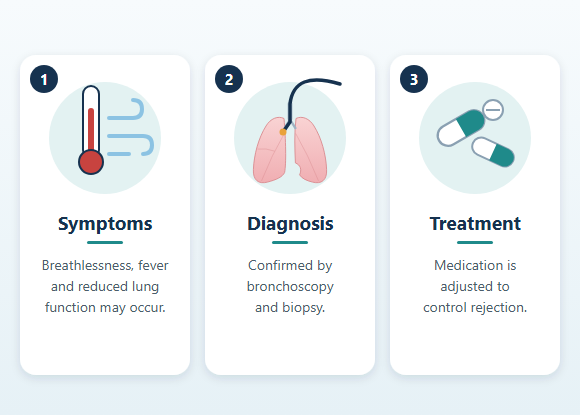
Acute cellular rejection occurs when immune cells react against the transplanted lung tissue. Although it is more common in the early period after transplantation, it can also develop in later years. Some patients may have no symptoms. Possible signs include:
  • Shortness of breath
  • Cough
  • Fever
  • Fatigue
  • A drop in oxygen levels
  • Decreased lung function
Bronchoscopy and lung biopsy may be needed for diagnosis.

Antibody-Mediated Rejection

Antibody-mediated rejection is a form of rejection associated with antibodies that develop in the recipient's immune system against donor tissues. The diagnosis is not based on a single test. Clinical status, lung function, antibody tests, imaging and pathology findings may be evaluated together. Depending on the person's condition, treatment may include medications and procedures that affect the immune system through different mechanisms.

Chronic Lung Allograft Dysfunction

Permanent loss of function that develops in the transplanted lung over time may be evaluated under the heading of chronic lung allograft dysfunction, or CLAD. CLAD can present in different forms. In some patients, narrowing of the small airways predominates, while in others, stiffening of the lung tissue and loss of volume may be seen. Factors that may be associated with chronic loss of graft function include:
  • Recurrent acute rejection
  • Antibody-mediated rejection
  • Infections
  • Stomach contents leaking into the airways
  • Airway problems
  • Irregular use of immunosuppressive medications
Treatment may include investigating possible underlying causes, adjusting immunosuppressive therapy and supportive measures.

Risk of Infection After Lung Transplantation

Medications that suppress the immune system can reduce the body's defense against infections. Because the lungs are in direct contact with the outside environment, respiratory infections are particularly important. After transplantation, the following may occur:
  • Bacterial lung infections
  • Viral infections
  • Fungal infections
  • Tuberculosis and other opportunistic infections
  • Urinary tract infections
  • Surgical wound infections
To reduce the risk, measures such as the following may be used:
  • Preventive medications
  • Appropriate vaccination
  • Hand hygiene
  • Food safety
  • Avoiding sources of infection
The vaccination plan is arranged by the transplant team according to the person's immune status. Some live vaccines may not be suitable for people with a suppressed immune system.

Airway Complications

The surgical connection created between the donor bronchus and the recipient's bronchus is closely monitored after transplantation. In this area, the following may develop:
  • Narrowing
  • Separation at the connection site
  • Softening of the bronchial wall
  • Excessive healing tissue
  • Infection
Airway complications can be evaluated with bronchoscopy. When treatment is needed, balloon dilation, stents, bronchoscopic interventions or, in selected cases, surgical methods may be used.

Other Possible Complications

In the early or late period after lung transplantation, the following may occur:
  • Bleeding
  • Blood clots
  • Heart rhythm disorders
  • Impaired kidney function
  • Diabetes
  • High blood pressure
  • Osteoporosis
  • Nervous system problems
  • Stomach and esophageal diseases
  • Increased risk of certain types of cancer
  • Wound healing problems
  • Muscle loss
  • Psychological difficulties
Not every patient develops the same complications. Regular follow-up can help detect some problems before they cause symptoms or reach an advanced stage.

Bronchoscopy and Surveillance Biopsies

After lung transplantation, bronchoscopy may be used for:
  • Evaluating the airway connections
  • Obtaining respiratory samples
  • Investigating infection
  • Taking lung biopsies to check for rejection
  • Evaluating airway narrowing
The bronchoscopy and biopsy schedule may not be the same at every transplant center. Some centers perform routine surveillance bronchoscopies at set times, while at others the procedure may be performed when there are changes in clinical findings or lung function.

Discharge from Hospital and Rehabilitation

The length of the hospital stay after lung transplantation is not the same for everyone. The function of the new lung, infection, rejection, muscle strength and other complications can affect the timing of discharge. Before discharge, the person and the family members who will support their care may be given education about:
  • Medication use
  • Monitoring lung function
  • Preventing infection
  • Wound care
  • Nutrition
  • Exercise
  • Symptoms to watch for
  • The checkup schedule
During rehabilitation, walking, breathing exercises and muscle-strengthening work are gradually increased according to the person's condition.

Follow-Up After Lung Transplantation

Lung transplantation requires lifelong follow-up. Follow-up may include:
  • Clinical examination
  • Pulmonary function tests
  • Chest X-ray or computed tomography
  • Blood tests
  • Measurement of immunosuppressive medication levels
  • Monitoring of kidney and liver function
  • Infection assessments
  • Bronchoscopy
  • Assessment for organ rejection
  • Appropriate cancer screening
  • Bone health
  • Metabolic assessments
Checkups are more frequent in the early period after transplantation. As the clinical condition stabilizes, the intervals between checkups may change, but transplant follow-up never ends.

Monitoring Lung Function at Home

Some patients may be asked to measure their lung function regularly at home using a portable spirometer. An unexplained drop in lung function values may be related to:
  • Organ rejection
  • Infection
  • Airway narrowing
  • Fluid buildup
  • Other lung problems
A single measurement does not always mean disease. However, persistent or significant changes may need to be evaluated by the transplant team.
After transplantation, changes such as:
  • New or worsening shortness of breath
  • A marked drop in lung function
  • Fever
  • Increased cough or sputum
  • A drop in oxygen levels
  • Chest pain
  • Marked fatigue
  • Diarrhea or vomiting
  • Decreased urine output
  • Being unable to take medications
  • Redness or discharge at the surgical wound
may require evaluation for infection, organ rejection or medication side effects. Infection and organ rejection can cause similar symptoms in some cases. For this reason, they cannot be reliably distinguished by symptoms alone.

Daily Life After Lung Transplantation

After lung transplantation, daily life is gradually readjusted. Key practices include:
  • Taking medications regularly
  • Paying attention to hand hygiene
  • Avoiding cigarettes and tobacco smoke
  • Eating safely prepared food
  • Regular physical activity
  • Maintaining a healthy body weight
  • Sun protection
  • Keeping up with dental and oral care
  • Having recommended health screenings
  • Not using medications or herbal products without supervision
Immunosuppressive medications can interact with other medications, supplements and certain foods. For this reason, over-the-counter medications, vitamin or mineral supplements and herbal products should not be used without the transplant team's knowledge.

Exercise After Lung Transplantation

Exercise can be important for regaining muscle strength and increasing capacity for daily activities after transplantation. The rehabilitation program may include:
  • Walking
  • Breathing exercises
  • Strengthening the arm and leg muscles
  • Balance exercises
  • Endurance exercises
The type and intensity of exercise are adjusted according to postoperative recovery, heart health, bone condition, muscle strength and the medications being taken.

Life After Lung Transplantation

After lung transplantation, some patients may experience significant improvement in breathing capacity and activities of daily living. However, after transplantation, the following are required for life:
  • Use of immunosuppressive medications
  • Protection against infection
  • Regular checkups
  • Monitoring of lung function
  • Assessment of organ rejection and graft function
Transplant outcomes vary from person to person. Factors that may affect outcomes include:
  • Health status before transplantation
  • The underlying lung disease
  • Age and physical resilience
  • The characteristics of the donor organ
  • Early complications
  • Infections
  • Organ rejection
  • Chronic graft dysfunction
  • Taking medications regularly
  • Keeping up with the follow-up program
Lung transplantation is not limited to a single day of surgery. It is a long-term treatment process that includes evaluation, candidacy, the waiting list, surgery, intensive care, rehabilitation and lifelong follow-up.

Frequently Asked Questions About Lung Transplantation

Who is lung transplantation performed for?
Lung transplantation may be considered for selected people who have advanced, irreversible lung disease that continues to progress despite available treatments. Candidacy is determined not only by the diagnosis but also by overall health, the function of other organs and the expected benefits and risks of transplantation.
Is lung transplantation performed for every patient with advanced COPD?
No. Not every person with advanced COPD or emphysema is a transplant candidate. Lung function, the rate of disease progression, oxygen requirement, hospital admissions, overall health and other treatment options are evaluated together.
Is there an age limit for lung transplantation?
Candidacy is not determined by a single age limit alone. Some transplant-related risks may increase with age. For this reason, age is evaluated together with the person's physical condition and coexisting diseases.
Is one lung replaced, or both?
Both approaches can be used. The decision is based on the type of disease, infection status, the person's overall health characteristics, surgical risk and the characteristics of the donor organ. In diseases with chronic infections, such as cystic fibrosis and advanced bronchiectasis, double lung transplantation is usually required.
Can a person who smokes have a lung transplant?
Active tobacco and nicotine use is a significant risk factor for transplantation. Transplant centers may require candidates to quit cigarettes, e-cigarettes and other nicotine products and, when necessary, may confirm this with laboratory tests.
Can organ rejection occur after lung transplantation?
Yes. The immune system can react against the transplanted lung. For this reason, immunosuppressive medications are used for life, and regular follow-up is performed to check for organ rejection.
Are medications taken for life after lung transplantation?
Immunosuppressive treatment is usually continued for life. The types and doses of medications may be changed according to the person's clinical condition, blood levels, side effects and the course after transplantation.
Is a normal life possible after lung transplantation?
Significant improvements in daily life and physical capacity may be seen after transplantation. However, regular medication use, protection against infection, checkups and lifelong transplant follow-up continue.
Why does the risk of infection increase after lung transplantation?
The immunosuppressive medications used to prevent organ rejection can reduce the immune system's response to infections. For this reason, preventive medications, vaccination, hygiene and regular follow-up are important.
Does applying to a transplant center mean being placed on the waiting list?
No. Being referred to a transplant center means that the candidacy evaluation begins. Based on the results of the tests, the person may be placed on the waiting list, followed up, re-evaluated after certain risks have been corrected, or found unsuitable for transplantation.
Disclaimer: The information on this website is provided for general informational purposes and does not replace a personal medical evaluation. Lung transplant candidacy, placement on the waiting list, donor selection and treatment decisions are determined individually based on detailed medical, surgical and other necessary evaluations performed at authorized transplant centers.