Facial and Scalp Sweating
What causes facial and scalp sweating? Information on the causes and diagnosis of craniofacial hyperhidrosis, facial sweating, and the available treatment options.
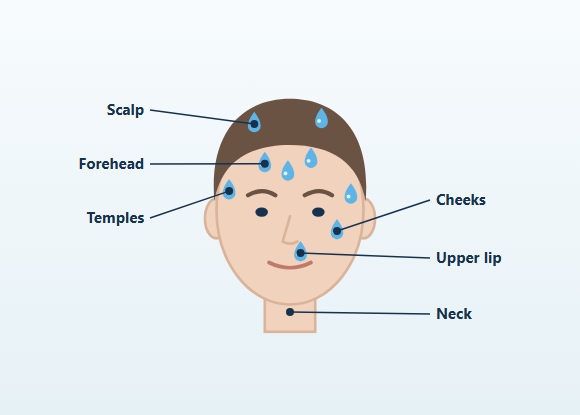
Facial and Scalp Sweating (Craniofacial Hyperhidrosis)
Sweating of the face and head is part of the body's natural temperature-regulation mechanism. Sweating of the face and scalp can be a normal physiological response during hot weather, physical activity, fever, stress, excitement, or when having hot drinks or spicy foods.
However, if sweating occurs regardless of the body's need to cool down, recurs in cool environments, or becomes intense enough to noticeably affect daily life, it may be excessive facial and scalp sweating, known as craniofacial hyperhidrosis.
Sweating may occur in different areas, such as the:
- Forehead
- Scalp
- Temples
- Area around the nose
- Cheeks
- Upper lip
- Chin
- Back of the neck
- Neck
What Is Craniofacial Hyperhidrosis?
Craniofacial hyperhidrosis is a type of hyperhidrosis characterized by sweat production on the face and scalp beyond the body's physiological needs.
The activity of the sweat glands in the face and scalp is influenced by the autonomic nervous system.
People with primary craniofacial hyperhidrosis do not necessarily have more sweat glands than normal. The problem is mostly related to normally structured sweat glands being stimulated by the nervous system more than usual.
Sweating can vary in severity:
Sweating can vary in severity:
- Intermittent dampness on the forehead
- Droplets of sweat on the upper lip
- Sweating around the nose or cheeks
- Sweat running down from the forehead
- Sweat reaching the eyes
- Hair roots that stay constantly damp
- Hair becoming wet within a short time
- Heavy sweating on the head and neck
- A wet shirt collar or headwear
- Sweating that requires wiping the face again and again
Where Can Facial and Scalp Sweating Occur?
Craniofacial hyperhidrosis can affect different parts of the face and head.
Sweating may occur in the following areas:
The distribution of sweating varies from person to person. Limited forehead sweating and widespread sweating affecting the entire face and scalp are not the same clinical picture. The extent of the affected area is important in the evaluation and in determining treatment options.
Sweating may occur in the following areas:
- Forehead
- Scalp
- Temple
- Area around the eyebrows
- Nose
- Cheek
- Upper lip
- Chin
- Area around the ears
- Back of the neck
- Neck
The distribution of sweating varies from person to person. Limited forehead sweating and widespread sweating affecting the entire face and scalp are not the same clinical picture. The extent of the affected area is important in the evaluation and in determining treatment options.
How Does Facial and Scalp Sweating Affect Daily Life?
Because the face is directly visible during social interaction, the impact of craniofacial hyperhidrosis on daily life may be more pronounced than the amount of sweat itself.
Excessive facial and scalp sweating may lead to:
In some people, a scalp that stays damp for long periods may also contribute to problems such as:
Anxiety about the sweating being noticed can increase sympathetic nervous system activity and make sweating even more pronounced.
Excessive facial and scalp sweating may lead to:
- A need to wipe the face frequently
- Sweat reaching the eyes
- Discomfort when wearing glasses
- Sunscreen or other skin products running
- Hair becoming wet within a short time
- Discomfort when wearing a hat, hard hat, or protective headgear
- Distraction during meetings or presentations
- A sense of discomfort during video calls
- Anxiety about others noticing the sweating
- Avoidance of certain social or professional settings
In some people, a scalp that stays damp for long periods may also contribute to problems such as:
- Itching
- Irritation
- Sensitivity
- Disruption of the skin barrier
- Existing scalp conditions becoming more noticeable
Anxiety about the sweating being noticed can increase sympathetic nervous system activity and make sweating even more pronounced.
What Is Primary Craniofacial Hyperhidrosis?
Primary craniofacial hyperhidrosis is a condition in which no other disease or medication effect that could explain the facial and scalp sweating has been identified.
It may be noticed at a later age than some other types of primary focal hyperhidrosis. However, it can also begin in childhood, adolescence, or young adulthood.
Primary craniofacial hyperhidrosis usually:
Primary craniofacial hyperhidrosis usually:
- Affects both sides of the face similarly
- Is recurrent
- Is more noticeable during waking hours
- Decreases or disappears during sleep
- May increase with heat, stress, or excitement
- Can also occur in cool environments
- May also be seen in other family members
- May occur together with hand, foot, or underarm sweating
What Is Secondary Facial and Scalp Sweating?
Facial or scalp sweating may also occur in connection with another disease, a physiological change, or medications being used.
In this case, it is referred to as secondary hyperhidrosis.
Features that may suggest a secondary cause include:
Conditions that may be associated with secondary sweating include:
Even if a medication is thought to be increasing sweating, it should not be stopped without a physician's evaluation.
Features that may suggest a secondary cause include:
- Sudden onset of sweating in adulthood
- A marked increase within a short period
- Sweating affecting only one side of the face
- Heavy sweating during sleep
- Sweating that affects the whole body
- Fever, palpitations, or shivering
- Unexplained weight changes
- Marked fatigue or weakness
- Neurological symptoms
- Sweating that appears after starting a new medication
Conditions that may be associated with secondary sweating include:
- An overactive thyroid gland
- Low blood sugar
- Diabetes
- Menopause and hormonal changes
- Febrile illnesses and certain infections
- Certain neurological diseases
- Conditions affecting the autonomic nervous system
- Certain systemic diseases
- Use of alcohol or certain substances
- Side effects of certain medications
Even if a medication is thought to be increasing sweating, it should not be stopped without a physician's evaluation.
Is Facial and Scalp Sweating Genetic?
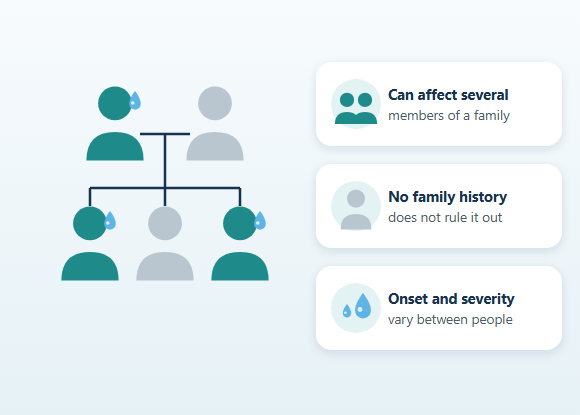
Primary craniofacial hyperhidrosis can occur in more than one person within the same family. Facial, hand, foot, or underarm hyperhidrosis in a parent or sibling may suggest that genetic predisposition plays a role. However, the absence of a family history does not rule out primary craniofacial hyperhidrosis. Even among members of the same family, the age of onset, the severity of sweating, and the body areas affected may differ.
Does Stress Increase Facial and Scalp Sweating?
Stress, excitement, embarrassment, and anxiety can increase sympathetic nervous system activity.
This can cause the sweat glands of the face and scalp to be stimulated more.
In people with primary craniofacial hyperhidrosis, this response may be more pronounced.
Thinking that they will sweat, or worrying that others will notice the sweating, can trigger a new stress response and worsen symptoms.
This does not mean that craniofacial hyperhidrosis is merely a psychological problem.
Hyperhidrosis is a physical sweating disorder; however, psychological and emotional triggers can affect the severity of sweating.
Are Facial Sweating and Facial Flushing the Same Thing?
No.
Facial sweating is the formation of sweat on the skin surface as a result of sweat gland activity.
Facial flushing, on the other hand, is a reddening of the skin caused by the widening of blood vessels in the face.
Stress, excitement, embarrassment, a hot environment, exercise, or spicy foods can trigger both conditions.
For this reason, facial sweating and facial flushing can occur at the same time.
However, a person may sweat heavily without flushing, or may experience flushing without noticeable sweating.
The causes and treatment approaches of these two conditions are not the same.
Does Facial and Scalp Sweating Continue During Sleep?
Primary craniofacial hyperhidrosis usually decreases markedly or stops during sleep.
When heavy facial or scalp sweating continues throughout the night, other causes are also evaluated.
These may include:
New-onset night sweating that noticeably soaks the pillow or hair is evaluated separately from primary hyperhidrosis, especially if other symptoms are also present.
These may include:
- A hot sleeping environment
- Very thick bedding or covers
- Menopause and hot flashes
- Febrile illnesses
- Certain infections
- Hormonal or metabolic conditions
- Certain medications being used
- Night sweats affecting the whole body
New-onset night sweating that noticeably soaks the pillow or hair is evaluated separately from primary hyperhidrosis, especially if other symptoms are also present.
Can Menopause Cause Facial and Scalp Sweating?
Hormonal changes during menopause can cause hot flashes and episodes of sweating.
These episodes often occur together with a sudden feeling of heat in the face, head, neck, and chest.
Accompanying symptoms may include:
Menopause-related hot flashes and sweating are not the same condition as primary craniofacial hyperhidrosis.
Accompanying symptoms may include:
- Facial flushing
- Night sweats
- A feeling of palpitations
- Sleep disturbance
- Sudden chills
- Recurrent hot flashes during the day
Menopause-related hot flashes and sweating are not the same condition as primary craniofacial hyperhidrosis.
Why Does the Face Sweat While Eating?
Sweating of the face, forehead, or scalp while eating spicy, hot (peppery), or very hot foods can be a physiological response.
However, if sweating regularly occurs with meals, is concentrated in a limited area, or causes significant discomfort, it may be gustatory sweating.
Gustatory sweating may be associated with:
Gustatory sweating and primary craniofacial hyperhidrosis are not the same condition.
Gustatory sweating may be associated with:
- A normal response to certain foods
- Diabetes-related involvement of the nervous system
- Certain neurological conditions
- Surgery of the face or neck
- Salivary gland surgery
- Nerve injuries
Gustatory sweating and primary craniofacial hyperhidrosis are not the same condition.
What Is Frey Syndrome?
Frey syndrome is a type of gustatory sweating that can develop after surgery on the salivary gland in front of the ear, called the parotid gland, or after a local nerve injury.
It can occur when, during nerve healing, nerve fibers associated with saliva secretion become incorrectly connected to the sweat glands in the skin.
During meals, or sometimes even when thinking about food, the following may occur in front of the ear, at the temple, or on the cheek:
Frey syndrome usually appears only on the affected side of the face. This feature can help distinguish it from primary craniofacial hyperhidrosis, which is usually bilateral.
During meals, or sometimes even when thinking about food, the following may occur in front of the ear, at the temple, or on the cheek:
- Sweating
- Flushing
- A feeling of warmth
Frey syndrome usually appears only on the affected side of the face. This feature can help distinguish it from primary craniofacial hyperhidrosis, which is usually bilateral.
How Is the Severity of Facial and Scalp Sweating Assessed?
The severity of craniofacial hyperhidrosis is not determined solely by the amount of sweat produced.
The assessment may take into account:
Mild craniofacial hyperhidrosis may be limited to intermittent dampness. In moderate cases, regular and visible sweating may occur on the face or scalp. In severe craniofacial hyperhidrosis, sweat droplets may run down the face, the hair may become noticeably wet, and daily, social, or professional activities may be affected.
The assessment may take into account:
- How often sweating occurs
- The extent of the affected areas
- The presence of visible sweat droplets
- Whether sweat reaches the eyes
- How often the face is wiped
- Wetting of the hair or clothing
- The impact on professional activities
- Avoidance of social settings
- Difficulties using skin products
- The impact on wearing hats or protective equipment
- Response to previous treatments
Mild craniofacial hyperhidrosis may be limited to intermittent dampness. In moderate cases, regular and visible sweating may occur on the face or scalp. In severe craniofacial hyperhidrosis, sweat droplets may run down the face, the hair may become noticeably wet, and daily, social, or professional activities may be affected.
How Is Craniofacial Hyperhidrosis Diagnosed?
The evaluation is mostly based on a detailed medical history and physical examination.
Information that may be taken into account includes:
If there is a typical history consistent with primary craniofacial hyperhidrosis, extensive laboratory testing is not necessary for everyone.
When secondary hyperhidrosis is suspected, depending on the person's symptoms, the following may be considered:
Information that may be taken into account includes:
- The age at which sweating began
- How long it has been going on
- Whether both sides of the face are affected
- Whether there is sweating on the scalp
- Whether it continues during sleep
- Situations that increase sweating
- Whether it is related to meals
- Hyperhidrosis of the hands, feet, or underarms
- Its impact on daily life
- Medications being used
- Accompanying diseases
- Family history
- Menopausal symptoms
- History of face, neck, or salivary gland surgery
- Previous treatments
If there is a typical history consistent with primary craniofacial hyperhidrosis, extensive laboratory testing is not necessary for everyone.
When secondary hyperhidrosis is suspected, depending on the person's symptoms, the following may be considered:
- Blood sugar
- Thyroid function tests
- Blood count
- Kidney and liver function
- Tests related to infection or hormones
- Neurological evaluation
- Review of medications being used
Are Sweat Tests Necessary for Facial and Scalp Sweating?
Certain tests can be used to show the distribution or amount of sweating.
The starch-iodine test can help highlight areas of active sweating.
This method can be used especially when the distribution of sweating in a limited area needs to be determined.
The amount of sweat produced over a certain period can also be measured using gravimetric methods.
In meal-related localized sweating such as Frey syndrome, evaluating the sweating area before and after food stimulation can be helpful.
These tests do not need to be performed on everyone.
The medical history and the impact of sweating on daily life often provide more information than a single measurement of sweat volume.
Are There Other Conditions That Resemble Facial and Scalp Sweating?
Sweating on the face or scalp does not always mean primary craniofacial hyperhidrosis.
Similar symptoms may be related to:
Sweating that consistently affects only one side of the face is not typical of primary craniofacial hyperhidrosis. If one-sided sweating is accompanied by numbness, weakness, eyelid changes, or other neurological symptoms, other causes are evaluated separately.
Similar symptoms may be related to:
- Hot weather
- Intense physical activity
- Fever or infection
- Low blood sugar
- Thyroid disorders
- Menopause
- Anxiety or panic attacks
- Side effects of certain medications
- Autonomic nervous system disorders
- Certain neurological diseases
- Gustatory sweating
- Frey syndrome
- Alcohol use
- Very hot work environments
- Use of headgear or equipment with poor ventilation
Sweating that consistently affects only one side of the face is not typical of primary craniofacial hyperhidrosis. If one-sided sweating is accompanied by numbness, weakness, eyelid changes, or other neurological symptoms, other causes are evaluated separately.
How Is Facial and Scalp Sweating Treated?
The treatment approach is not the same for everyone.
During planning, the following are taken into account:
In primary craniofacial hyperhidrosis, treatment usually starts with less invasive methods.
Approaches that may be considered include:
The fact that one method is not sufficient does not automatically mean that surgical treatment is needed. The goal of treatment is not to make the face and scalp completely dry, but to reduce the impact of excessive sweating on daily life.
During planning, the following are taken into account:
- Whether the sweating is primary or secondary
- The affected areas
- The severity of sweating
- Its impact on daily life
- The characteristics of the facial skin
- Whether the area around the eyes is affected
- Medications being used
- Accompanying diseases
- Methods tried previously and the response to them
In primary craniofacial hyperhidrosis, treatment usually starts with less invasive methods.
Approaches that may be considered include:
- Adjustments to daily life and environment
- Antiperspirants in suitable areas
- Certain topical medications
- Certain oral medications
- Botulinum toxin in selected cases
- Methods aimed at gustatory sweating
- Psychological or behavioral support when needed
- Thoracic sympathetic surgery in carefully selected advanced cases
The fact that one method is not sufficient does not automatically mean that surgical treatment is needed. The goal of treatment is not to make the face and scalp completely dry, but to reduce the impact of excessive sweating on daily life.
What Can Be Done in Daily Life?
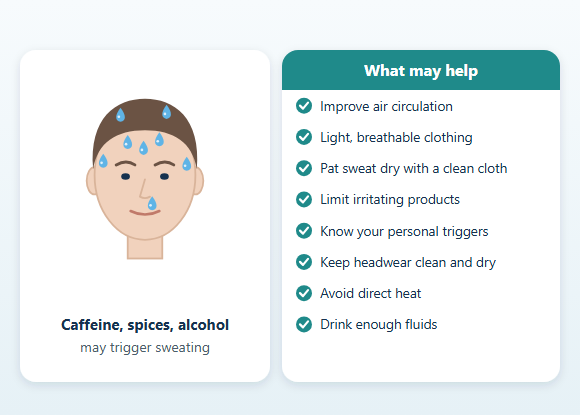
Daily adjustments do not eliminate the underlying mechanism of primary craniofacial hyperhidrosis, but they can help reduce some symptoms.
These may include:
- Improving air circulation in hot environments
- Choosing lightweight, breathable clothing
- Drying sweat with a clean cloth or tissue if it reaches the eyes
- Limiting products that irritate the skin
- Identifying personal sweating triggers
- Keeping protective headgear and equipment clean and dry
- Avoiding prolonged direct exposure to heat
- Maintaining adequate fluid intake during physical activity
Can Antiperspirants Be Used on the Face?
Antiperspirant products may be considered for certain limited areas of the face. However, facial skin is more sensitive than the skin of the underarms, hands, or feet. For this reason, the ingredients, concentration, and application area of the product are important. Antiperspirants should not be applied to:- the eyelids,
- the area around the eyes,
- the inside of the nose,
- the lips,
- irritated or damaged skin
- burning,
- redness,
- itching,
- dry skin,
- peeling,
- irritation
Topical Medications
Certain topical medications that aim to reduce the nerve signals stimulating the sweat glands may be considered in craniofacial hyperhidrosis. Topical anticholinergic medications are among the methods that have been studied for this purpose. Possible effects may include:- skin irritation,
- dryness,
- dry mouth,
- blurred vision,
- pupil dilation if the medication comes into contact with the eye,
- difficulty urinating
Oral Medications
Certain anticholinergic medications can systemically reduce nerve stimulation of the sweat glands. They may be considered when sweating affects a large part of the face and scalp, or when sweating is also present in other areas. These medications may reduce sweat production not only on the face but also in other parts of the body. Possible side effects may include:- dry mouth,
- constipation,
- blurred vision,
- dry eyes,
- difficulty urinating,
- changes in heart rate,
- drowsiness,
- attention problems,
- difficulty regulating body temperature
Is Botulinum Toxin Used for Facial and Scalp Sweating?
Botulinum toxin aims to temporarily reduce the chemical signaling between nerve endings and sweat glands. In selected cases of craniofacial hyperhidrosis, it may be used on limited areas of the face or scalp. Studies have reported its use on:- the forehead,
- the hairline,
- the scalp,
- the temples,
- certain limited areas of the face,
- areas of sweating due to Frey syndrome
- temporary change in eyebrow position,
- reduced forehead movement,
- change in facial expression,
- temporary drooping of the eyelid,
- temporary asymmetry of facial or lip movements
How Is Gustatory Sweating Evaluated?
In meal-related sweating, the first step is to evaluate which foods trigger the symptoms and in which areas they occur. Limiting spicy or hot foods may reduce symptoms in some people. If the sweating is related to primary hyperhidrosis, nerve damage, diabetes-related involvement of the nervous system, or Frey syndrome, the approach varies according to the cause. For limited areas of gustatory sweating, methods such as certain topical medications or botulinum toxin may be considered.Is There a Role for Anxiety and Stress Management?
Because stress and anxiety can increase facial sweating, psychological and behavioral approaches may be supportive for people with marked social anxiety or avoidance behaviors. These may include:- relaxation techniques,
- breathing exercises,
- cognitive behavioral therapy,
- evaluation of marked social anxiety,
- reducing avoidance behaviors
What Is the Role of ETS in Facial and Scalp Sweating?
Endoscopic thoracic sympathetic surgery refers to surgical methods based on interrupting specific sympathetic nerve pathways inside the chest. In craniofacial hyperhidrosis, surgery is not a first-line treatment. Surgical evaluation may be considered in severe, selected cases of primary craniofacial hyperhidrosis in which less invasive methods, such as antiperspirants, appropriate topical or systemic medications, and botulinum toxin, have not been sufficient. The sympathetic pathways related to sweating in the face and head are closely related anatomically to the autonomic nerve structures of the eye and face. For this reason, the surgical decision takes into account not only the possible change in sweating, but also possible outcomes such as:- compensatory sweating,
- excessive dryness of the face or head,
- persistence or recurrence of sweating,
- changes in heart rate,
- Horner syndrome,
- pneumothorax,
- bleeding,
- infection,
- chest or nerve-related pain,
- anesthesia-related risks
What Is Horner Syndrome?
Horner syndrome is a neurological condition that can occur when the sympathetic nerve pathways reaching the eye and face are affected. Symptoms usually appear on the affected side as:- drooping of the upper eyelid,
- a smaller pupil,
- a change in the pupil's response to darkness,
- reduced facial sweating
What Is Compensatory Sweating?
Compensatory sweating is new or increased sweating after sympathetic surgery in areas that previously sweated less. Commonly affected areas include:- the back,
- the chest,
- the abdomen,
- the lower back,
- the buttocks,
- the groin,
- the legs
Can Facial and Scalp Sweating Return After Treatment?
The effect of most non-surgical methods used in craniofacial hyperhidrosis is temporary. When treatment is stopped or its effectiveness decreases over time, sweating may increase again. After surgery, too, sweating may not disappear completely or may reappear over time. Possible reasons for this include:- individual nerve anatomy,
- additional nerve pathways,
- changes in nerve conduction over time,
- the original sweating being secondary
Why Is Follow-Up After Treatment Important?
Follow-up does not assess only how dry the face and scalp are. The following may also be taken into account:- the amount and distribution of sweating,
- dryness of the face and scalp,
- changes in the eyelid or pupil,
- differences in facial movements,
- compensatory sweating,
- gustatory sweating,
- changes in sweating in other parts of the body,
- recurrence of sweating,
- effects and side effects of medications being used,
- social and psychological effects.
When Is a Medical Evaluation Important?
Facial or scalp sweating does not always mean a disease. However, evaluating the cause becomes important when any of the following features are present:- Sudden onset of sweating
- Sweating that affects only one side of the face
- Heavy sweating during nighttime sleep
- Sweating that affects the whole body
- Accompanying fever, palpitations, shivering, or unexplained weight changes
- Sweating that appears after starting a new medication
- Numbness or weakness in the face
- New changes in the eyelid or pupil
- Severe headache, dizziness, or fainting
- Sweating that begins after face or neck surgery
- Sweating on only one side of the face while eating
- Sweating that noticeably affects daily life
Frequently Asked Questions About Facial and Scalp Sweating
What causes facial sweating?
Facial sweating can normally increase with hot weather, physical activity, stress, excitement, hot drinks, or spicy foods. Excessive sweating that recurs without an obvious trigger and affects daily life may be related to primary craniofacial hyperhidrosis. Certain diseases and medications can also cause secondary facial sweating.
What causes head sweating?
Sweating of the scalp and head can increase with heat, exercise, stress, or hormonal changes. Primary craniofacial hyperhidrosis can also cause heavy sweating of the head and scalp. When sweating is new, continues at night, or occurs together with sweating in other parts of the body, secondary causes are also evaluated.
What disease can facial and scalp sweating be a symptom of?
Excessive facial and scalp sweating is not always a symptom of another disease. However, thyroid disorders, changes in blood sugar, menopause, certain infections, neurological conditions, and certain medications can increase sweating. The age of onset, the distribution of sweating, and accompanying symptoms are important.
How can facial sweating be stopped?
There is no single method that suits everyone. Depending on the cause and severity of sweating and the area affected, antiperspirants, certain topical or oral medications, and, in selected cases, botulinum toxin may be considered. Thoracic sympathetic surgery is regarded as one of the last-resort options, only in carefully selected advanced cases.
Which doctor should I see for facial and scalp sweating?
Localized facial and scalp hyperhidrosis can be evaluated by dermatology. If sweating occurs throughout the body, continues at night, or is accompanied by hormonal, metabolic, or neurological symptoms, evaluation by internal medicine, endocrinology, neurology, or other relevant specialties may be necessary. Surgical evaluation is considered separately, and only in selected cases.
What causes head sweating at night?
Primary craniofacial hyperhidrosis usually decreases during sleep. Nighttime head and facial sweating may be related to a very hot sleeping environment, menopause, certain infections, hormonal or metabolic conditions, and certain medications. In new-onset or heavy night sweating, other symptoms are also evaluated together.
Why does the face sweat while eating?
Hot (peppery), spicy, or very hot foods can physiologically cause facial sweating. Recurrent sweating during meals that is concentrated in a specific area of the face may be related to gustatory sweating. One-sided, meal-related sweating, especially after parotid surgery, may suggest Frey syndrome.
Does stress increase facial sweating?
Yes. Stress and anxiety can make facial and scalp sweating more pronounced by increasing sympathetic nervous system activity. However, the fact that stress increases sweating does not mean that craniofacial hyperhidrosis is merely a psychological condition.
Does botulinum toxin reduce facial and scalp sweating?
Botulinum toxin can reduce sweating in selected cases of facial and scalp hyperhidrosis by temporarily reducing the nerve signals that stimulate the sweat glands. Its effect is not permanent. Because of the proximity of the facial muscles, side effects such as temporary changes in facial expression or asymmetry may occur, and the scientific evidence for this area is more limited than for axillary hyperhidrosis.
Is ETS surgery performed for facial and scalp sweating?
ETS is not a first-line treatment for craniofacial hyperhidrosis. Surgical evaluation may be carried out in selected primary cases that significantly affect quality of life and in which appropriate non-surgical methods have not been sufficient. Because of important possible effects such as compensatory sweating and Horner syndrome, the results and risks of surgery are weighed together.