Underarm Sweating
What Causes Underarm Sweating? Information on the Causes and Diagnosis of Axillary Hyperhidrosis, Antiperspirants, Botulinum Toxin, and Other Treatment Options.
Underarm Sweating (Axillary Hyperhidrosis)
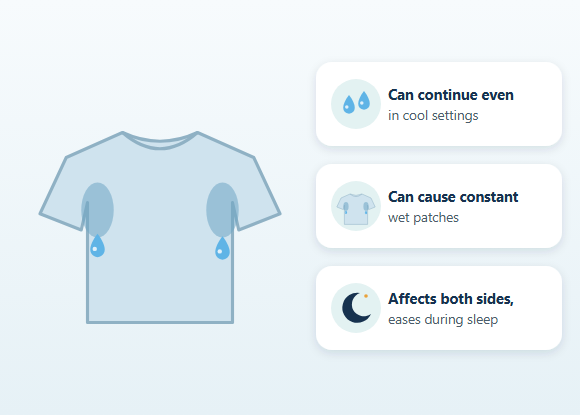
Underarm sweating is part of the body's natural temperature-regulating mechanism. Increased sweating during hot weather, physical activity, fever, stress, excitement, or hormonal changes can be a normal physiological response. However, if sweating occurs regardless of the body's need to cool down, continues in cool environments, or becomes intense enough to cause constant and noticeable wetness on clothing, it may be excessive underarm sweating, known as axillary hyperhidrosis. Axillary hyperhidrosis is not just sweating that appears in hot weather or during exercise. In some people it can also occur at rest, during everyday conversations, or without any obvious trigger. Primary axillary hyperhidrosis usually affects both underarms in a similar way and decreases during sleep. Excessive underarm sweating is not a directly life-threatening condition. Nevertheless, it can affect clothing choices, work life, social situations, skin health, and day-to-day comfort.
What Is Axillary Hyperhidrosis?
Underarm sweating can occur at different levels of severity:
- Intermittent mild dampness
- Small sweat marks on clothing
- Noticeable wetness in the underarms on a regular basis
- Needing to change clothes during the day
- Sweat marks spreading over a large part of the clothing
- In severe cases, sweat running down from the underarms
How Does Underarm Sweating Affect Daily Life?
Excessive underarm sweating can lead to:
- Avoiding certain clothing colors
- Prioritizing hiding sweat marks when choosing clothes
- Needing to change clothes during the day
- Carrying a spare change of clothes
- Avoiding raising the arms
- Feeling uncomfortable in meetings or social settings
- Anxiety about sweat marks being noticed
- Avoiding certain social or professional situations
- Moisture-related discoloration or fabric changes in clothing
As a result, the following may occur:
- Irritation
- Itching
- Redness
- Friction-related tenderness
- Softening of the skin
- Susceptibility to certain fungal or bacterial skin problems
- Changes in skin color
- Odor
Worry about sweating being noticed can increase sympathetic nervous system activity. This can create a cycle in which sweating increases anxiety and anxiety increases sweating. For this reason, axillary hyperhidrosis is not regarded as merely a cosmetic problem.
What Is Primary Axillary Hyperhidrosis?
Primary axillary hyperhidrosis usually:
- Affects both underarms in a similar way
- Is recurrent
- Is more noticeable during waking hours
- Decreases or disappears during sleep
- May increase with heat, stress, or excitement
- May begin without an obvious trigger
- May also be seen in other members of the same family
What Is Secondary Underarm Sweating?
Features that may suggest a secondary cause include:
- Sweating that starts for the first time in adulthood
- Symptoms that increase markedly over a short period
- Noticeably more sweating in one underarm than the other
- Sweating that continues during sleep
- Sweating that affects large areas of the body
- Accompanying fever, palpitations, or shivering
- Unexplained weight changes
- Marked fatigue or weakness
- Sweating that appears after starting a new medication
- An overactive thyroid gland
- Low blood sugar
- Diabetes
- Menopause and hormonal changes
- Febrile illnesses and certain infections
- Certain neurological diseases
- Conditions affecting the autonomic nervous system
- Certain systemic diseases
- Use of alcohol or certain substances
- Side effects of certain medications
Even if a medication is thought to be increasing sweating, it should not be stopped without a physician's evaluation.
Is Underarm Sweating Genetic?
Why Does Stress Increase Underarm Sweating?
Stress, excitement, embarrassment, and anxiety can increase sympathetic nervous system activity. This can lead to greater stimulation of the sweat glands in the underarms. In people with primary axillary hyperhidrosis, this response may be more pronounced. Even the thought that sweat marks will be visible in a meeting, during a presentation, or in a social setting can trigger a new stress response and increase sweating. This does not mean that axillary hyperhidrosis is purely psychological. Axillary hyperhidrosis is a physical sweating disorder; however, emotional triggers can affect the severity of symptoms.

Does Underarm Sweating Continue During Sleep?
These may include:
- A very warm sleeping environment
- Febrile illnesses
- Certain infections
- Hormonal or metabolic conditions
- Certain medications
- Night sweats affecting the body as a whole
Night sweats alone do not establish the diagnosis of a specific disease. The time of onset, the distribution of sweating, and other accompanying symptoms are evaluated together.
Are Underarm Sweating and Body Odor the Same Thing?
How Is the Severity of Underarm Sweating Assessed?
The assessment may take into account:
- How often sweating occurs
- Whether both underarms are affected
- The size of sweat marks on clothing
- The need to change clothes during the day
- Restrictions on clothing choices
- Avoidance of social situations
- Effects on professional activities
- Development of skin irritation or infection
- Response to previous treatments
In mild axillary hyperhidrosis, there may be intermittent dampness, and daily life may be largely unaffected. In moderate hyperhidrosis, visible sweat marks may appear regularly, clothing choices may be restricted, or there may be a need to change clothes. In severe cases, large areas of clothing can become wet, and sweating can markedly affect social, professional, or daily activities. This grouping is not a definitive laboratory classification.
How Is Axillary Hyperhidrosis Diagnosed?
When taking the history, the following may be assessed:
- The age at which sweating began
- How long it has been going on
- Whether both underarms are affected
- Whether it continues during sleep
- Situations that increase sweating
- Excessive sweating in other areas of the body
- Its impact on daily life
- Medications being taken
- Coexisting conditions
- Family history
- Fever, palpitations, shivering, or unexplained weight changes
- Previous treatments
If there is a typical history consistent with primary axillary hyperhidrosis, comprehensive laboratory testing is not necessary for everyone. When secondary hyperhidrosis is suspected, depending on the person's symptoms, tests such as the following may be considered:
- Blood sugar
- Thyroid function tests
- Blood count
- Kidney and liver function
- Tests related to infection or hormones
- A review of medications being taken
Are Tests Done for Underarm Sweating?
Are There Other Conditions That Resemble Underarm Sweating?
Similar symptoms may be related to:
- Hot weather
- Intense physical activity
- Fever or infection
- Low blood sugar
- Thyroid diseases
- Anxiety or panic attacks
- Side effects of certain medications
- Diseases affecting the autonomic nervous system
- Certain skin diseases
- Tight or poorly ventilated clothing
- Hot working environments
Sweating that is consistently prominent in only one underarm is not typical of primary focal hyperhidrosis. If one-sided sweating is accompanied by pain, numbness, weakness, or noticeable skin changes, other causes are also considered.
How Is Treatment for Underarm Sweating Planned?
Planning takes into account:
- Whether the sweating is primary or secondary
- Its severity
- Its impact on daily life
- Skin type
- Medications being taken
- Coexisting conditions
- Previously used methods and the response to them
In primary axillary hyperhidrosis, treatment usually starts with less invasive methods.
Options that may be considered include:
- Changes in daily habits
- Antiperspirants
- Certain topical medications
- Certain oral medications
- Botulinum toxin treatments
- Iontophoresis in selected cases
- Localized procedures targeting the sweat glands
- Psychological or behavioral approaches when needed
- Thoracic sympathetic surgery in carefully selected cases
If one method is not sufficient, this does not automatically mean that surgical treatment is required. The goal of treatment is not necessarily to eliminate sweating completely in every case, but to reduce it to a level that does not significantly affect daily life, the skin, or social functioning.
What Can Be Done in Daily Life?
These may include:
- Choosing breathable clothing
- Changing clothes that become wet
- Keeping the underarms clean and dry
- Avoiding products that persistently irritate the skin
- Identifying personal sweating triggers
- Increasing air circulation in hot environments
- Using underarm pads to protect clothing when appropriate
- Adjusting skin care if skin irritation develops
In some people, alcohol, spicy foods, caffeine, nicotine, or intense stress can increase sweating. Triggers can vary from person to person.
What Is the Difference Between a Deodorant and an Antiperspirant?
Deodorants
They are mainly intended to reduce or mask body odor. They usually do not reduce the amount of sweat.Antiperspirants
They aim to reduce the amount of sweat reaching the skin surface by temporarily affecting the sweat ducts. Some products may have both deodorant and antiperspirant properties, but the two terms do not mean the same thing.Are Antiperspirants Used for Underarm Sweating?
Antiperspirants containing aluminum salts are among the first nonsurgical methods that may be considered for axillary hyperhidrosis. These products aim to reduce the amount of sweat reaching the skin surface by temporarily affecting the sweat ducts. Possible side effects include:- burning,
- itching,
- redness,
- dryness,
- skin irritation
Topical Medications
Certain prescription medications applied to the underarms aim to reduce the nerve signals that stimulate the sweat glands. In some countries, topical anticholinergic medications may be available in different forms, such as wipes, gels, creams, or solutions. Possible local or systemic side effects include:- skin irritation,
- burning,
- dryness,
- dry mouth,
- blurred vision,
- dilation of the pupil if the medication comes into contact with the eye,
- difficulty urinating
Oral Medications
Certain anticholinergic medications can be used systemically to reduce the nerve stimulation reaching the sweat glands. These medications can affect sweating not only in the underarms but also in other areas of the body. Possible side effects include:- dry mouth,
- constipation,
- blurred vision,
- dry eyes,
- difficulty urinating,
- changes in heart rate,
- drowsiness,
- problems with concentration,
- difficulty regulating body temperature
Is Botulinum Toxin Used for Underarm Sweating?
Botulinum toxin aims to temporarily reduce chemical signaling between certain nerve endings and the sweat glands. It is one of the treatment options used for primary axillary hyperhidrosis. During the procedure, many small injections are made into the skin of the area that sweats excessively. Its effect is not permanent. Sweating can increase again as nerve function is restored over time. Possible side effects include:- discomfort during the injections,
- temporary tenderness,
- bruising,
- headache,
- local irritation,
- rarely, temporary weakness of nearby muscles
Is Iontophoresis Used for Underarm Sweating?
Iontophoresis is a method used mainly for hand and foot hyperhidrosis. Although some special devices have been developed for use in the underarm area, the procedure may be less practical than for the hands and feet because of the anatomy of the area and the sensitivity of the skin. Repeated initial treatments followed by maintenance sessions may be needed. Possible effects include:- dry skin,
- redness,
- burning,
- irritation,
- tingling
What Localized Procedures Target the Underarm Sweat Glands?
Some procedures aim to directly reduce the number or activity of the sweat glands in the underarms. Different methods may use:- heat- or energy-based treatments,
- mechanical reduction of the sweat glands,
- curettage,
- liposuction-like techniques,
- limited surgical procedures
- pain,
- swelling,
- bruising,
- changes in skin sensation,
- firmness under the skin,
- infection,
- scarring,
- changes in skin color,
- irregularity of the underarm skin,
- insufficient reduction in sweating,
- sweating increasing again over time
Is There a Role for Anxiety and Stress Management?
Because stress can increase axillary hyperhidrosis, psychological or behavioral approaches may be supportive for people with marked anxiety or avoidance behaviors. These may include:- relaxation techniques,
- breathing exercises,
- cognitive behavioral therapy,
- evaluation of marked social anxiety,
- reducing avoidance behaviors
What Is the Role of Surgery in Underarm Sweating?
In isolated axillary hyperhidrosis, surgery is generally not considered a first-line treatment. Nonsurgical or local options are available, such as antiperspirants, topical medications, botulinum toxin, and various methods that directly target the underarm sweat glands. Thoracic sympathetic surgery, on the other hand, does not act on the sweat glands in the underarms directly, but on the sympathetic nerve pathways located inside the chest. The role of this surgery is more clearly established in severe primary palmar hyperhidrosis than in cases involving underarm sweating alone. For this reason, sympathetic surgery for underarm sweating is considered only in carefully selected cases in which appropriate less invasive methods have already been evaluated.What Is ETS?
Endoscopic thoracic sympathetic surgery, commonly referred to as ETS, refers to surgical methods based on interrupting certain sympathetic nerve pathways inside the chest. These nerve pathways play a role in transmitting the signals that influence sweating. ETS can reduce sweating in some types of primary focal hyperhidrosis. However, when only the underarms are affected, results can be more variable than in severe primary hand sweating. For this reason, ETS is not considered a routine early-stage treatment for isolated axillary hyperhidrosis.Is ETS Reversible?
Sympathetic nerve surgery should not be regarded as a reliably reversible procedure. In different surgical techniques, the sympathetic nerve pathway can be affected in different ways. Although some operations use surgical clips instead of physically cutting the nerve, removing the clip later does not necessarily mean that nerve function or the pre-operative sweating pattern will return. Nerve compression, scar tissue, and other permanent changes can occur. For this reason, sympathetic nerve surgery is evaluated with its possible long-term consequences in mind.What Are the Possible Risks of Thoracic Sympathetic Surgery?
The use of a minimally invasive (closed) surgical technique does not mean that thoracic sympathetic surgery is risk-free. Possible outcomes and complications include:- compensatory sweating,
- excessive dryness,
- persistent underarm sweating,
- recurrence of sweating,
- different results on the two sides,
- gustatory (taste-related) sweating,
- pneumothorax,
- hemothorax,
- bleeding,
- infection,
- chest or nerve-related pain,
- slowing of the heart rate,
- Horner syndrome,
- anesthesia-related complications
What Is Compensatory Sweating?
Compensatory sweating is the appearance of new or increased sweating, after sympathetic surgery, in areas that previously sweated less. It is most often seen in areas such as the:- back,
- chest,
- abdomen,
- lower back,
- hips,
- groin,
- legs
Can Underarm Sweating Recur After Treatment?
The effects of many methods used for axillary hyperhidrosis are not permanent. When treatment is stopped or its effectiveness decreases over time, sweating can increase again. Sweating can also persist or return after a localized procedure or sympathetic surgery. Possible reasons for this include:- sweat glands that remain active,
- individual anatomical differences,
- differences in the method used,
- changes in nerve conduction over time,
- the presence of a secondary cause of sweating
Why Is Follow-Up After Treatment Important?
Follow-up is not only about checking whether the underarms are completely dry. The following may also be considered:- changes in daily life,
- the amount and distribution of sweating,
- skin dryness or irritation,
- body odor,
- compensatory sweating after sympathetic surgery,
- changes in sweating in other areas of the body,
- recurrence of sweating,
- the effects and side effects of medications being used,
- social and psychological effects.
When Is a Medical Evaluation Important for Underarm Sweating?
Underarm sweating does not always indicate a disease. However, evaluating the cause of sweating becomes important when any of the following features are present:- Sudden onset of sweating
- One underarm consistently sweating much more than the other
- Heavy sweating during sleep at night
- Sweating that affects the whole body
- Accompanying fever, palpitations, shivering, or unexplained weight changes
- Symptoms that appear after starting a new medication
- Recurrent skin infections or marked irritation
- Sweating that significantly affects daily life
- If sudden sweating is accompanied by chest pain, shortness of breath, fainting, or other acute symptoms, urgent medical evaluation may be needed.