Foot Sweating
What causes foot sweating (plantar hyperhidrosis)? Information on primary and secondary causes, diagnosis, iontophoresis, antiperspirants and other treatment options.
Foot Sweating (Plantar Hyperhidrosis)
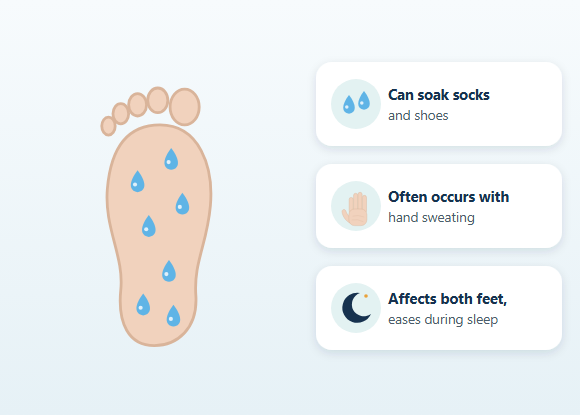
Foot sweating is part of the body's natural sweating mechanism, which helps regulate body temperature. Sweaty feet can be considered normal in hot weather, during physical activity, fever, stress or excitement, or when wearing closed shoes for long periods. However, if sweating occurs independently of the body's need to cool down, continues in cool environments, or reaches a level that noticeably soaks socks and shoes, it may be excessive foot sweating, known as plantar hyperhidrosis. In plantar hyperhidrosis, the soles of the feet may stay slightly damp, or heavy sweating may completely soak the socks, cause the feet to slip inside the shoes, or produce visible droplets of sweat on the soles. Primary plantar hyperhidrosis usually begins in childhood or adolescence, affects both feet similarly and decreases during sleep. Foot sweating may occur on its own or together with excessive sweating in other parts of the body, especially the hands. Foot sweating is not a directly life-threatening condition. Nevertheless, it can affect walking comfort, choice of footwear, sports activities, work life, social life and the health of the skin on the feet.
What Is Plantar Hyperhidrosis?
Foot sweating can vary in severity:
- Intermittent dampness on the soles of the feet
- Noticeable dampness in socks
- Socks becoming wet during the day
- The inside of the shoes remaining constantly damp
- Feet slipping inside the shoes
- Slipping when wearing sandals or slippers
- Visible droplets of sweat on the soles
- In very severe cases, sweat dripping from the toes
Hot weather, physical activity, stress, excitement and wearing closed shoes can increase sweating. However, primary plantar hyperhidrosis cannot be explained by heat or psychological factors alone.
How Does Foot Sweating Affect Daily Life?
Excessive foot sweating can lead to:
- The need to change socks during the day
- Being unable to wear certain shoes
- Slipping inside the shoes
- Friction and blisters during sports
- Discomfort when standing for long periods
- Moisture and odor in shoes
- Feeling uncomfortable about taking off shoes in social settings
Skin that stays damp for long periods can also affect the skin barrier. As a result, the following may occur:
- Softening and whitening of the skin
- Irritation
- Itching
- Peeling
- Cracks
- Friction sores
- Blisters
- Susceptibility to fungal and certain bacterial infections
For this reason, plantar hyperhidrosis should not be regarded merely as a matter of odor or hygiene.
What Is Primary Plantar Hyperhidrosis?
Primary plantar hyperhidrosis usually:
- Affects both feet similarly
- Is recurrent
- Is more noticeable during the day
- Decreases or stops during sleep
- May increase with heat, stress and excitement
- May also occur in cool environments
- May also be seen in other family members
- May occur together with hand sweating
In primary hyperhidrosis, the structure of the sweat glands is usually normal. Greater-than-normal nerve stimulation reaching the sweat glands is considered one of the main mechanisms.
What Is Secondary Foot Sweating?
Features that may suggest a secondary cause include:
- Sweating that begins for the first time in adulthood
- Symptoms that increase markedly over a short period
- Only one foot being affected
- A marked difference between the right and left foot
- Sweating that continues during sleep
- Sweating over large areas of the body
- Accompanying fever, palpitations or tremor
- Unexplained weight changes
- Muscle weakness
- Numbness or changes in sensation
- Sweating that appears after starting a new medication
Conditions that may be associated with secondary hyperhidrosis include:
- An overactive thyroid gland
- Low blood sugar
- Diabetes
- Menopause and hormonal changes
- Febrile illnesses and certain infections
- Certain neurological diseases
- Conditions affecting the autonomic nervous system
- Use of alcohol or certain substances
- Certain antidepressants
- Certain pain relievers
- Side effects of hormone medications and other drug groups
Even if a medication is thought to be increasing sweating, it should not be stopped without a physician's evaluation.
Is Foot Sweating Genetic?
Does Stress Increase Foot Sweating?
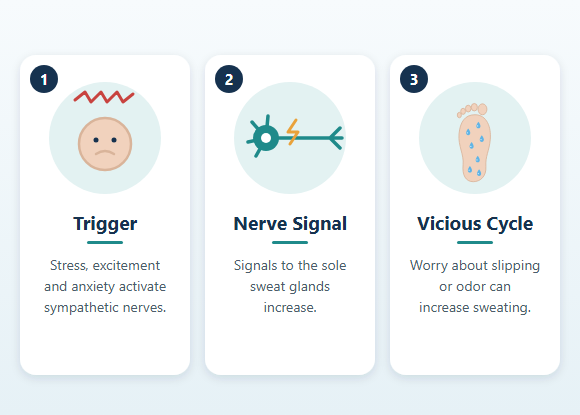
Stress, excitement, embarrassment and anxiety can increase the activity of the sympathetic nervous system. This can also increase the nerve stimulation reaching the sweat glands on the soles of the feet. In people with primary plantar hyperhidrosis, this response may be more pronounced. Worrying that shoes will slip, that odor will be noticed or that shoes will have to be taken off in a social setting can trigger a new stress response and further increase sweating. This does not mean that plantar hyperhidrosis is purely a psychological problem. Plantar hyperhidrosis is a physical sweating disorder; however, stress and anxiety can affect the severity of symptoms.
Does Foot Sweating Continue at Night?
These may include:
- A very warm sleeping environment
- Non-breathable socks or bedding
- Febrile illnesses
- Certain infections
- Hormonal or metabolic diseases
- Certain medications
- Night sweats affecting the whole body
Night sweating alone does not establish the diagnosis of a specific disease. The time of onset, distribution of sweating and other accompanying symptoms are evaluated together.
Can Hand and Foot Sweating Occur Together?
Are Foot Sweating and Foot Odor the Same Thing?
Does Foot Sweating Cause Fungal Infection?
Athlete's foot (foot fungus) can cause symptoms such as:
- Itching between the toes
- Peeling skin
- Whitening
- Redness
- Cracking
- Burning
- Scaling on the soles
Not every case of peeling, odor or itching means a fungal infection. Eczema, irritation, bacterial infections and prolonged moisture can also cause similar complaints.
How Is the Severity of Foot Sweating Assessed?
The following features may also be taken into account:
- How often sweating occurs
- Whether both feet are affected
- How wet the socks become
- The need to change socks during the day
- Moisture inside the shoes
- Slipping while walking or during sports
- Restrictions in choice of footwear
- Development of skin problems
- Impact on social or work life
- Response to previously tried methods
How Is Plantar Hyperhidrosis Diagnosed?
The evaluation may take into account information such as:
- The age at which sweating began
- How long the symptoms have been present
- Whether both feet are affected
- Whether sweating continues during sleep
- Factors that increase sweating
- Hyperhidrosis in the hands or other areas
- Impact on daily life
- Medications being taken
- Other medical conditions
- Family history
- Accompanying fever, palpitations or weight change
- Numbness, pain or weakness in the feet
- Previous treatments
If there is a typical history consistent with primary plantar hyperhidrosis, extensive laboratory testing is not necessary for everyone.
When secondary hyperhidrosis is suspected, depending on the person's symptoms, tests such as the following may be considered:
- Blood sugar
- Thyroid function tests
- Complete blood count
- Kidney and liver function
- Tests related to infection or hormones
- Review of medications being taken
Are Sweat Tests Necessary for Foot Sweating?
Are There Other Conditions That Resemble Foot Sweating?
Similar complaints may be related to:
- Hot weather
- Intense physical activity
- Closed, non-breathable shoes
- Synthetic socks or socks that do not wick away moisture
- Fever and infection
- Low blood sugar
- Thyroid diseases
- Certain medications
- Diseases of the autonomic nervous system
- Athlete's foot (foot fungus)
- Eczema
- Bacterial skin infections
- Certain nerve or circulatory problems
In particular, sweating of only one foot or a marked difference between the two feet is not typical of primary plantar hyperhidrosis.
How Is Treatment for Foot Sweating Planned?
When planning treatment, the following are taken into account:
- Whether the sweating is primary or secondary
- Its severity
- Its impact on daily life
- The condition of the skin on the feet
- Accompanying fungal or bacterial infections
- Medications being taken
- Other medical conditions
- Previously tried methods and the response to them
In primary plantar hyperhidrosis, treatment usually starts with less invasive methods.
Methods that may be considered include:
- Daily foot care and environmental adjustments
- Antiperspirants
- Iontophoresis
- Certain topical medications
- Certain oral medications
- Botulinum toxin injections
- Treatment of accompanying skin conditions
If one method is not sufficient, this does not automatically mean moving on to a more invasive method. The goal of treatment is not necessarily to make the feet completely dry, but to reduce the impact of sweating on daily life and skin health.
Daily Foot Care
Supportive measures may include:
- Washing the feet regularly
- Drying thoroughly, especially between the toes
- Changing socks when they get wet
- Alternating shoes
- Letting shoes dry before wearing them again
- Choosing shoes with good breathability
- Checking the skin of the feet for sores, irritation or infection
Foot powders can absorb some of the moisture, but they do not directly reduce sweat gland activity and are not a substitute for hyperhidrosis treatment.
Choosing Socks and Shoes
For shoes, features such as the following may be considered:
- Breathability
- A width that fits the foot
- An insole that can be removed and dried
- Suitability for the activity
- Not wearing the same pair all the time
What Is the Difference Between Deodorant, Foot Powder and Antiperspirant?
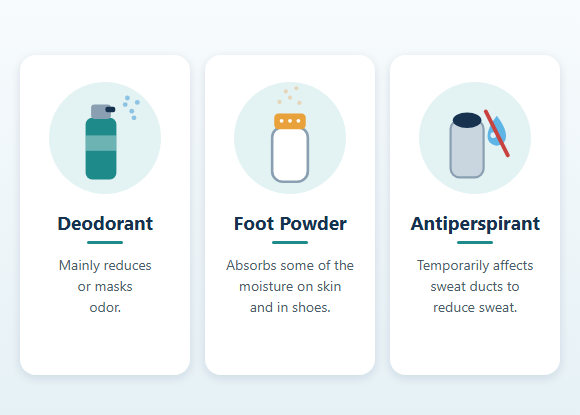
These products serve different purposes. Foot deodorants are mainly intended to reduce or mask odor. Foot powders can absorb some of the moisture on the skin and inside the shoes. Antiperspirants, on the other hand, aim to reduce the amount of sweat reaching the skin surface by temporarily acting on the sweat ducts. Foot odor and excessive sweating can occur together, but they are not the same problem.
Are Antiperspirants Used for Foot Sweating?
Antiperspirants containing aluminum salts are among the first non-surgical methods that may be considered for plantar hyperhidrosis. These products aim to reduce the amount of sweat reaching the skin surface by having a temporary effect on the sweat ducts. During use, the following may occur:- burning,
- itching,
- redness,
- dryness,
- peeling,
- irritation
How Is Iontophoresis Used for Foot Sweating?
Iontophoresis is one of the non-surgical methods commonly considered for primary plantar hyperhidrosis. During the procedure, the feet are placed in special trays containing water, and a low-level electrical current is applied. Treatment is usually repeated more frequently at the start. Once sweating has decreased, sessions can be continued at longer intervals to maintain the effect. The effect of iontophoresis is not permanent, and sweating may gradually increase again when sessions are stopped. Possible effects include:- tingling,
- dry skin,
- redness,
- irritation,
- burning or pain in small cracks
Topical Medications
Certain topical medications that aim to reduce the nerve stimulation of the sweat glands can be used in the treatment of hyperhidrosis. Because the skin on the soles of the feet is thicker than in some other areas of the body, not every product used for other areas may have the same effect in plantar hyperhidrosis. With certain topical anticholinergic products, local effects such as:- burning of the skin,
- redness,
- dryness,
- irritation
Oral Medications
Certain anticholinergic medications can be used systemically to reduce the nerve stimulation reaching the sweat glands. These medications may affect sweating not only in the feet but also in other parts of the body. Possible side effects include:- dry mouth,
- constipation,
- blurred vision,
- dry eyes,
- difficulty urinating,
- changes in heart rate,
- reduced ability to regulate body temperature in hot environments
Is Botulinum Toxin Used for Foot Sweating?
Botulinum toxin aims to limit sweat production by temporarily reducing chemical transmission from the nerve endings that stimulate the sweat glands. It may be used in selected cases of plantar hyperhidrosis. Because the soles of the feet contain many nerve endings, the injections may be more painful than in some other areas. The effect is not permanent. Sweating may increase again once the function of the nerve endings is restored over time. Depending on the injection site, effects such as the following may occur:- injection pain,
- bruising,
- temporary tenderness,
- discomfort when walking,
- temporary muscle weakness or changes in movement
Should Skin Problems on the Feet Be Treated Separately?
Plantar hyperhidrosis can cause the skin to stay damp for long periods. However, reducing sweating does not mean that existing skin problems such as fungal infection, bacterial infection or eczema will go away on their own. If the feet have:- marked cracks between the toes,
- widespread peeling,
- persistent itching,
- redness,
- skin changes together with unpleasant odor,
- painful sores,
- discharge,
- swelling,
- changes in the color or shape of the nails
Does ETS Treat Foot Sweating?
Endoscopic thoracic sympathetic surgery is a surgical method targeting the sympathetic nerve pathways located in the chest cavity. The uses of this surgery mainly relate to certain types of upper-body hyperhidrosis. Some people who have undergone thoracic sympathetic surgery for hand sweating may also notice a change in foot sweating. However, how foot sweating will respond to surgery cannot be reliably predicted. For this reason, the presence of plantar hyperhidrosis alone is not considered a routine reason for thoracic sympathetic surgery. The sympathetic pathways that control foot sweating are not anatomically the same as the sympathetic nerve levels located inside the chest.Is There a Role for Surgery in Foot Sweating?
Surgery is not a first-line treatment for isolated plantar hyperhidrosis. Current approaches first consider antiperspirant products, iontophoresis and, where appropriate, other non-surgical methods. Surgical methods for foot sweating may involve nerve regions that are anatomically different from those in thoracic ETS and may carry significant autonomic, neurological and other long-term risks. For this reason, surgical procedures for foot sweating are not considered a routine treatment option and represent a separate area of surgical evaluation from general hyperhidrosis treatment.Can Foot Sweating Come Back After Treatment?
The effects of most non-surgical methods used for foot sweating are not permanent. When treatment is stopped or its effectiveness decreases over time, sweating may increase again. For this reason, evaluating the treatment result is not based solely on whether the feet are completely dry. The extent to which daily life, walking and sports comfort, footwear use and skin health are affected is also taken into account.When Is Medical Evaluation Important?
Foot sweating does not always mean a disease. Nevertheless, evaluating the cause of sweating becomes important when any of the following features are present:- Sudden onset of sweating
- Only one foot being affected
- A marked difference between the two feet
- Heavy sweating during sleep at night
- Sweating spreading to the whole body
- Accompanying fever, palpitations, tremor or unexplained weight change
- Sweating that appears after starting a new medication
- Numbness, weakness or marked color change in the feet
- Recurrent fungal or bacterial infections
- Sores, cracks or discharge on the skin
- Sweating that significantly affects daily life