What Does a Lung Nodule Mean? When Is Surgery Needed?
October 19, 2026
What Is Pectus Carinatum Brace Treatment?
October 19, 2026
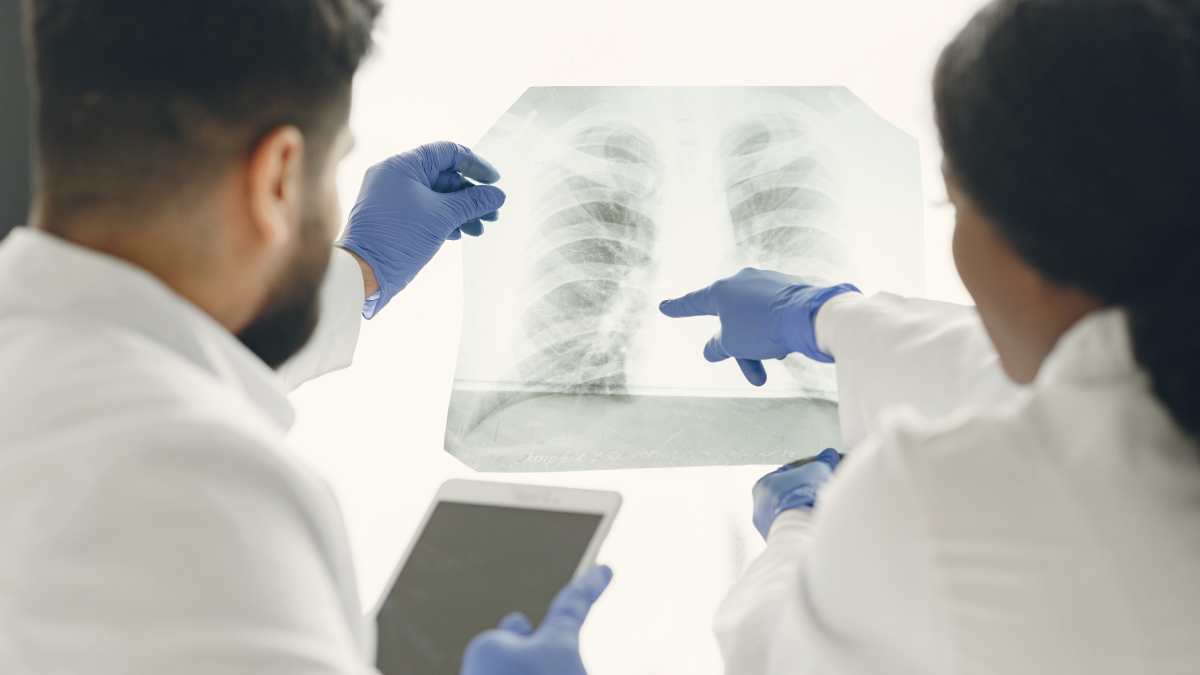
VATS stands for “Video-Assisted Thoracoscopic Surgery.” It is a minimally invasive surgical technique used in thoracic surgery and allows many procedures to be performed through smaller incisions with the help of a camera.
In open thoracic surgery, access to the chest is obtained through a larger incision. In VATS, a camera and specialized surgical instruments are introduced through smaller incisions in the chest wall.
VATS may be used in the diagnosis and treatment of various conditions involving the lungs, pleura, mediastinum, and chest cavity.
However, VATS is not suitable for every patient or every condition. The surgical approach depends on the type and extent of the disease, the location of the lesion, the patient’s overall health, and the scope of the planned operation.
What Is VATS?
VATS is a surgical technique in which the chest cavity is visualized using a camera rather than through a large open incision.
During the operation, several small incisions are usually made in the chest wall. A camera is introduced through one incision, while surgical instruments are inserted through the others.
The camera transmits a magnified image of the operative field to a high-resolution monitor, allowing the surgeon to perform the procedure while viewing the inside of the chest.
VATS can be used not only for small biopsies but also for more extensive lung resections in selected patients.
What Does “Minimally Invasive Thoracic Surgery” Mean?
The term “minimally invasive thoracic surgery” generally refers to approaches such as VATS and robotic thoracic surgery.
The word “minimally invasive” does not mean that no operation is performed.
The main difference is how the surgeon gains access to the chest cavity.
In open thoracic surgery, a larger incision may be required and the space between the ribs may be widened to reach the surgical area.
In VATS, the procedure is performed through smaller incisions using a camera and specialized instruments.
How Is VATS Performed?
VATS procedures are generally performed under general anesthesia.
Depending on the operation, the patient may be positioned on their side. During surgery, the lung on the operated side may be temporarily deflated to create additional working space within the chest cavity.
Small incisions are then made in the chest wall.
Through these incisions, the surgeon may introduce:
- a camera,
- grasping and dissecting instruments,
- cutting devices,
- stapling systems when required.
Once the planned procedure has been completed, the surgical area is checked carefully.
In many thoracic operations, a chest tube is placed to drain air and fluid from the chest cavity after surgery.
Which Conditions Can Be Treated with VATS?
VATS can be used in many areas of thoracic surgery.
In suitable patients, it may be considered for:
- lung nodules,
- selected early-stage lung cancers,
- lung biopsies,
- pneumothorax,
- pulmonary bullae,
- pleural diseases,
- pleural effusion,
- empyema,
- mediastinal masses,
- selected lung metastases,
- lung cysts,
- certain chest trauma cases.
Whether VATS is appropriate depends on the characteristics of the condition and the patient.
Can Lung Cancer Surgery Be Performed with VATS?
Yes, in selected patients.
Some operations for early-stage lung cancer can be performed using VATS.
These may include:
- wedge resection,
- segmentectomy,
- lobectomy.
In cancer surgery, the goal is not only to remove the tumor. Appropriate evaluation or removal of lymph nodes may also be required.
For this reason, the decision to use VATS is based not simply on having smaller incisions but on whether the required oncological surgery can be performed safely and appropriately.
What Is a VATS Lobectomy?
A lobectomy is the surgical removal of one anatomical lobe of the lung.
A VATS lobectomy is the same lung resection performed through a minimally invasive, camera-assisted approach.
Lobectomy may be required for certain lung diseases, particularly selected lung cancers.
During the procedure, the blood vessels and bronchus supplying the affected lobe are divided, and the lobe is removed.
The main difference between open lobectomy and VATS lobectomy is the method used to access the chest rather than the basic purpose of the operation.
What Is a VATS Wedge Resection?
A wedge resection involves removing a small, wedge-shaped portion of lung tissue containing the lesion.
It may be used for:
- diagnosis of lung nodules,
- selected small peripheral lesions,
- certain carefully selected tumors.
VATS allows this procedure to be performed through smaller incisions.
However, wedge resection is not an adequate oncological operation for every lung cancer. The required extent of surgery depends on the disease.
What Is a VATS Segmentectomy?
The lobes of the lungs are divided into anatomical segments.
A segmentectomy removes one anatomical segment rather than the entire lung lobe.
It may be considered in selected early-stage lung cancers or other localized lung diseases.
In suitable patients, segmentectomy can also be performed using VATS.
Can Pneumothorax Be Treated with VATS?
Yes, in selected cases.
Pneumothorax occurs when air collects between the lung and chest wall in the pleural space, causing part or all of the lung to collapse.
Some small first-time pneumothoraces may not require surgery.
However, surgical evaluation may be considered in situations such as:
- recurrent pneumothorax,
- persistent air leak,
- significant pulmonary bullae,
- certain occupational or clinical circumstances.
With VATS, the area responsible for the air leak may be treated and additional pleural procedures may be performed to reduce the risk of recurrence.
Is VATS Used for Pleural Diseases?
Yes.
The pleura is the thin membrane surrounding the lungs and lining the inside of the chest cavity.
VATS may be used for the diagnosis or treatment of conditions involving the pleura.
Examples include:
- pleural biopsy,
- assessment of recurrent pleural effusion,
- treatment of empyema,
- evaluation of pleural thickening or masses.
Can Mediastinal Masses Be Removed with VATS?
Some mediastinal masses can be removed with VATS in suitable patients.
The mediastinum is the central area between the lungs and contains structures such as the heart, major blood vessels, thymus, esophagus, and lymphatic tissues.
The choice of surgical approach depends on factors such as:
- size of the mass,
- exact location,
- relationship with major blood vessels,
- involvement of surrounding structures.
What Is the Difference Between VATS and Open Thoracic Surgery?
The traditional open approach to the chest is known as thoracotomy.
In a thoracotomy, a larger incision is made in the chest wall to provide direct access to the surgical area.
In VATS, the inside of the chest is viewed with a camera and the operation is performed through smaller incisions.
In both approaches, the fundamental purpose of surgery is to treat the disease appropriately.
The primary difference lies in the surgical access technique.
What Are the Advantages of VATS?
In appropriately selected patients, VATS may offer several advantages compared with open thoracic surgery.
Smaller Surgical Incisions
VATS generally uses smaller incisions than a traditional thoracotomy.
Potentially Less Postoperative Pain
Because trauma to the chest wall may be more limited, some patients may experience less postoperative pain.
However, no thoracic operation is completely pain-free.
Earlier Mobilization
Some patients may be able to sit, stand, and walk earlier after surgery.
Early mobilization is an important part of recovery after thoracic surgery.
Potentially Shorter Hospital Stay
Depending on the type of operation and the patient’s clinical condition, hospital stay may be shorter after certain VATS procedures compared with open surgery.
Earlier Return to Daily Activities
Smaller incisions and reduced chest wall trauma may allow some patients to return to daily activities sooner.
Smaller Surgical Scars
The incisions used in VATS are generally smaller than those used for thoracotomy.
However, scars do not disappear completely and wound healing varies from person to person.
Are There Any Disadvantages or Limitations of VATS?
Yes.
VATS is not always the most appropriate approach.
In some cases, the surgeon may need to convert to open surgery because of:
- limited visibility,
- difficult-to-control bleeding,
- extensive adhesions,
- disease that is more extensive than expected,
- technical or anatomical reasons.
Conversion to open surgery does not necessarily mean that a complication or failure has occurred.
Sometimes it is the safest way to complete the operation properly.
Is Every Patient Suitable for VATS?
No.
The decision to use VATS is individualized.
Factors that may influence suitability include:
- type of disease,
- size and location of a tumor,
- relationship with surrounding structures,
- previous thoracic surgery,
- pleural adhesions,
- lung function,
- cardiac function,
- overall medical condition.
In some patients, open surgery may be safer or more appropriate.
How Long Does VATS Surgery Take?
VATS is not a single type of operation.
For this reason, the duration of surgery varies considerably.
A small pleural biopsy and a VATS lobectomy do not take the same amount of time.
The duration may also be affected by:
- anatomical characteristics,
- adhesions,
- previous operations,
- findings encountered during surgery.
There is therefore no single fixed duration that applies to all VATS procedures.
Is a Chest Tube Used After VATS?
In many VATS procedures, a chest tube is placed at the end of surgery.
The main purposes of the chest tube are to remove:
- air,
- blood,
- postoperative fluid
from the chest cavity.
It also helps the lung re-expand after surgery.
The timing of chest tube removal depends on findings such as air leakage and the amount of fluid drainage.
Is VATS Painful?
Pain can still occur after VATS.
Even though VATS is minimally invasive, the incisions, the spaces between the ribs, and the chest tube may all contribute to postoperative discomfort.
Pain levels vary between patients.
Effective pain control is important not only for comfort but also to help the patient breathe deeply, cough effectively, and move early after surgery.
When Can Patients Walk After VATS?
Early mobilization is generally encouraged when the patient’s condition allows.
Movement in bed, sitting, standing, and walking may begin early in the postoperative period.
Early mobilization may help:
- improve lung expansion,
- assist with clearing secretions,
- support circulation,
- reduce complications associated with prolonged immobility.
How Long Is the Hospital Stay After VATS?
Hospital stay depends on the extent of surgery.
The hospital stay after a small biopsy may be very different from the stay after a lung resection such as lobectomy.
Before discharge, factors such as the following are usually assessed:
- chest tube status,
- presence of air leakage,
- breathing function,
- pain control,
- ability to walk,
- general clinical condition.
What Is Recovery Like After VATS?
Recovery varies according to the type of operation and the individual patient.
During the first days, patients may experience:
- discomfort around the incisions,
- fatigue,
- cough,
- tenderness during deep breathing.
Breathing exercises and regular movement are important parts of postoperative recovery.
Recovery may take longer after more extensive lung resections.
When Can Patients Return to Work After VATS?
Return to work depends on the operation, the patient’s recovery, and the physical demands of their job.
Someone with a desk-based job may return at a different time from someone performing heavy physical work.
Factors considered include:
- pain,
- breathing capacity,
- tolerance for daily activity,
- wound healing,
- overall recovery.
What Are the Risks of VATS?
As with any surgical procedure, VATS carries potential risks.
Depending on the operation, these may include:
- bleeding,
- infection,
- prolonged air leak,
- pneumonia,
- respiratory complications,
- heart rhythm disturbances,
- blood clots,
- anesthesia-related complications.
The overall risk also depends on factors such as age, lung function, heart health, and other medical conditions.
Is VATS Better Than Open Surgery?
There is no single answer that applies to every patient.
VATS can provide important advantages in suitable patients.
However, the main goal of surgery is not simply to make smaller incisions.
The priority is to complete the necessary operation safely and appropriately.
VATS may be the best approach in one patient, while open surgery may be more suitable in another.
The decision should therefore be based on the disease and the patient’s individual characteristics.
Are VATS and Robotic Thoracic Surgery the Same?
No.
Both are minimally invasive thoracic surgery techniques, but they are technically different.
In VATS, the surgeon directly controls long surgical instruments while viewing the operative field on a monitor.
In robotic thoracic surgery, the surgeon controls robotic instruments from a dedicated console.
Each technique has different technical characteristics and may be suitable for different types of patients and operations.
The surgical approach is selected according to the planned procedure and individual clinical factors.
Frequently Asked Questions
1. What is VATS surgery?
VATS is a minimally invasive thoracic surgical technique in which operations inside the chest are performed through small incisions using a camera and specialized instruments.
2. Is VATS considered keyhole surgery?
VATS is commonly described as keyhole or minimally invasive chest surgery because the operation is performed through smaller incisions rather than a large thoracotomy.
3. Can lung cancer surgery be performed with VATS?
Yes. In selected patients with early-stage lung cancer, procedures such as wedge resection, segmentectomy, and lobectomy may be performed using VATS.
4. Are the ribs cut during VATS?
VATS is designed to access the chest through small incisions without creating the same wide opening used in traditional thoracotomy. The exact surgical technique depends on the procedure being performed.
5. Is VATS painful?
Postoperative pain can still occur. However, because chest wall trauma may be more limited, some patients experience less pain than after open thoracic surgery.
6. How long does a chest tube stay in after VATS?
There is no fixed duration. The chest tube is removed when factors such as air leakage, lung expansion, and drainage volume are considered satisfactory.
7. When can I walk after VATS surgery?
If the patient’s condition is stable, early movement and walking are generally encouraged during the postoperative period.
8. How long does recovery take after VATS?
Recovery depends on the extent of surgery. Recovery after a small biopsy is generally different from recovery after a major lung resection.
9. Can VATS be converted to open surgery?
Yes. Conversion may be required because of bleeding, extensive adhesions, unexpected anatomy, or other safety-related reasons.
10. Is VATS better than robotic surgery?
Neither technique is universally better for every patient. The appropriate approach depends on the disease, the planned operation, anatomy, and individual patient factors.
Information Note:
This content is intended for general informational purposes only. VATS is one of the minimally invasive techniques used in thoracic surgery, but it is not appropriate for every patient or every condition. The choice of surgical approach depends on the type and extent of disease, imaging findings, the planned procedure, lung function, and the patient’s overall health. The information provided here does not replace individual medical assessment, diagnosis, or treatment planning.